5 Essential AC Maintenance Tips

5 Essential AC Maintenance Tips

AC Maintenance Tips for Homeowners

Heat and humidity seem to be our constant companions during the summer months. Your air conditioner is a critical key to keeping your family comfortable during the long Texas cooling system. We often share tips with homeowners for maintaining air conditioners, but it may be good to know there are more steps you can take to help keep your house cool beyond your air conditioner. While these steps cannot take the place of AC, they certainly can help. Let’s take a look at some of these AC Maintenance steps.

“Use” Sunlight Wisely

Everyone loves natural light flowing into their home. However, summertime sunlight equates to an increase in indoor temperature. Closing blinds and/or drapes during the day will reduce sunlight and keep your home cooler during the hottest part of the day. Tree shade and directional facing will be different for each home; know how to keep your home cooler.

Plan Meals

Oven-cooked meals might be perfect during cooler months, but they put stress on your AC and warm your kitchen significantly. There are several options available to keep your kitchen cooler.

  • Set one day aside to cool meals for the week. This reduces the number of hot days in the kitchen
  • Plan to cook outdoors.
  • Use energy-saving appliances, such as air fryers and electric pressure cookers

Schedule Cleaning

Clothes dryers and dishwashers contribute a little bit of heat and humidity to your home and impact comfort. If you plan to run these devices in the evening hours, during the coolest part of the day, they should have a minimal impact on your comfort and help with energy conservation.

Redirect Your Ceiling Fans

Ceiling fans will not lower the air temperature but moving air speeds evaporation and therefore the air feels cooler. On the core of each ceiling fan is a small toggle switch that changes the direction of the fan. When the fan turns in the counterclockwise direction, it pushes air down and creates a cool breeze. Make sure each fan is turning counterclockwise during the summer to keep your home at peak comfort.

Address Problem Areas

If one or more rooms are consistently warmer than the rest of the house, don’t ignore the fact and research the root cause. Inspect every surface:

  • Check the attic for poor insulation
  • Check the windows and doors for leaks
  • Check the ducts to make sure they are intact and not leaking.

Of course, taking care of your air conditioner goes a long way toward keeping your home comfortable. Every mechanical system needs maintenance, and your air conditioner is no different. Cleaning the condenser coil, and ducts, and changing air filters are a few maintenance tasks that help your AC run efficiently. A regular preventative AC Maintenance inspection is recommended by your AC manufacturer.

Give All Cool AC a call to schedule an annual preventative AC maintenance visit with an HVAC professional.

Let us help with your AC Maintenance

Schedule your AC Maintenance assessment by calling AllCool AC & Heating at 281-238-9292 or contact us via email.

5 Essential AC Maintenance Tips

Air Conditioning Hurricane Preparedness Tips

Air Conditioning Hurricane Preparedness

Air Conditioning Hurricane Preparedness – Start Your Preparation Now!

The National Oceanic and Atmospheric Administration (NOAA) is set to predict the 2022 Atlantic Hurricane season in a few days.1 Early indication is that it will be active and storm intensity seems to have increased over the past decades. Residents in coastal communities should take measures to prepare homes and lives for a hurricane event this year. As part of these measures, make sure you follow our Air Conditioning Hurricane Preparedness Tips!

Measures to Take Before a Storm

While NOAA makes predictions for the 6-month hurricane season, The National Hurricane Center actually tracks storms as they develop over the south Atlantic. When a significant storm approaches land, they issue a warning 36 hours in advance to let residents make final Air Conditioning Hurricane Preparedness steps for the storm. However, some preparations should be made well in advance of a hurricane.

Schedule Routine Maintenance

Both your HVAC manufacturer and HVAC professionals recommend annual maintenance to help your system perform efficiently over many years. Preventative maintenance includes cleaning dust buildup in hard-to-reach places, inspection, and testing key electrical components, and paying close attention to the refrigerant gas needed for proper function.

If your system is poorly maintained before a hurricane puts great stress on the air conditioner, it can sustain greater damage from the storm.

Air Conditioning Hurricane Preparedness: Protect your Outdoor AC Unit

  • If your outdoor condenser unit is in a low-lying area, consider elevating it to avoid water damage. It should be set on a concrete slab as a firm foundation.
  • Tie-Downs. Make sure your condenser unit is securely fastened to the concrete slab with hurricane tie-downs. While it may appear large, it is constructed of lightweight material and can be moved by violent winds.
  • Check with the manufacturer for a hurricane weather-proof covering for the AC condenser unit. Local home improvement stores may also carry them. A covering, installed after the AC has been powered off, can prevent water damage from heavy rain. Be sure to remove the cover before restoring power to the air conditioner.

Purchase Emergency Supplies in Advance

State and local governments provide emergency preparedness plans that encourage you to purchase food, water, flashlights, batteries, first aid kits, etc. You are encouraged to make these purchases in advance of a hurricane warning to make sure supplies are available.

Measures During the 36-Hour Warning

Anticipate that hurricane-force winds (+74 mph) will damage the power grid and cause a power outage. In the process, power will blink on and off several times; each time that happens, it creates a power surge. Since even small power surges can damage computers, we plug sensitive equipment into power strips with surge protectors.

  • Your HVAC system may have a power surge protector installed inline to protect the system.
  • Whether your system has a power surge protector or not, turn off your HVAC system during a hurricane to protect it from potential damage.
    • Turn your thermostat to the Off position
    • Flip the breaker at your electrical service panel for both AC and furnace

Cool Down

Knowing that you will turn the AC off for an extended period, use the 36-hour time period to cool your house down. Lower the temperature a few degrees, anticipating the warm and humid air outside will quickly move indoors. Close blinds and curtains, even if your windows are covered. Continue to use ceiling and floor fans for as long you have power.

Measures to Take After a Storm

After the storm has passed and power has been restored, carefully follow the needed steps.

  • Remove any cover you might have placed on the outdoors AC unit
  • Check your power surge protector for the HVAC system. If it has tripped, reset it.
  • Flip the breaker for your system at the electric service panel and wait a few minutes.
  • Turn the thermostat to the COOL setting and set the temperature to the normal setting.

If your power is not restored, you will need to call an electrician. If your power is restored but the AC does not come on or does not cool properly, give All Cool a call.

Have Questions About Air Conditioning Hurricane Preparedness?

June begins the start of hurricane season on the Texas Gulf Coast. Let us help you with your Air Conditioning Hurricane Preparedness this season by calling AllCool AC & Heating at 281-238-9292 or contact us via email.
Air Conditioning Hurricane Preparedness

1 https://www.noaa.gov/media-advisory/noaa-to-announce-2022-atlantic-hurricane-season-outlook

5 AC Tune Up Tips to Save You Money

5 AC Tune Up Tips to Save You Money

5 Money-Saving Tips for Regularly Schedule AC Tune Ups

Spring is here! That is a short buffer time between cold weather and the hot and humid weather of summer. This is an excellent time to have your air conditioner serviced to make sure it is in great shape to keep your family comfortable and safe all summer long.

You hear HVAC professionals say that all the time and you might wonder “Does it make a difference?” Since it might seem like a little self-service for All Cool to say “yes,” we can give you an unbiased, expert opinion with nothing to gain from your response—the U.S. Department of Energy.1

Here are 5 motivations for you to service your AC this spring.

AC Tune Up Tip 1: Lengthen Your Warranty

If your AC unit has a warranty, it most likely requires an annual preventative maintenance service; check your documents. While a breakdown during the early years of service is unusual, keeping the warranty valid is important.

AC Tune Up Tip 2: Increase Useful Service Life

The #1 way to lengthen the service life of your air conditioner is to have it cleaned and serviced regularly. Service life claims vary, but here are a few general truths:

  • Furnaces generally last a few years longer than the air conditioner, but they are usually replaced at the same time.
  • Service life varies a lot, between 15 and 30 years. Again, the #1 difference-maker is regular maintenance.
  • Regular maintenance can add 5 or more years to service life compared to little or no maintenance.

AC Tune Up Tip 3: Decreased Repairs

As air conditioners age, parts will wear out and fail due to functional stress. The leading cause of this stress on any AC unit is dust and dirt that infiltrates various components. The two major functions of AC preventative maintenance are 1) removing dust and dirt from remote places, and 2) inspecting for damage and wear.

A well-maintained AC unit will experience fewer breakdowns and repairs over the service life since the wear is reduced and discovered early.

AC Tune Up Tip 4: Increase Efficiency

With stress-causing dirt and dust removed, your air conditioner will function better, from the compressor to the blower motor. With every AC cycle, your family will experience greater comfort, even during peak cooling periods.

AC Tune Up Tip 5: Decreased Energy Bills

Now more than ever, reducing utility bills will benefit the household budget. A well-maintained AC, functioning more efficiently, will reduce the cost of cooling your home all season long.

Regular maintenance provides more benefits such as improved indoor air quality and cleaner surfaces, but hopefully, these five reasons will motivate you to care for your AC while it keeps you cool and comfortable this summer.

Have Questions About AC Tune Up Tips?

Let us know how we can help with scheduling your AC Tune Up, call AllCool AC & Heating at 281-238-9292 or contact us via email.
5 AC Tune Up Tips to Save You Money

1 https://www.energy.gov/energysaver/maintaining-your-air-conditioner#:~:text=An%20air%20conditioner’s%20filters%2C%20coils,while%20energy%20use%20steadily%20increases


Tips to Have a Mold Free HVAC System in Your Home

How to Have a Mold-Free HVAC System

How to Have a Mold Free HVAC System

If the problem of mold keeps reoccurring, please consult with a mold remediation professional.

Your heating, ventilation, and air conditioning system (HVAC) are designed to heat and cool, freshen, clean, and dehumidify the air in your home for your protection and comfort. When the system ceases to provide one or more of these functions it can lead to a mold infestation.

A serious mold infestation is hard to eradicate and can be very harmful to your family; do not wait—call a professional.

Since it is so serious, let’s consider some ways to make sure mold does not become a problem inside your home. Let’s start with your HVAC system.

Humidity Regulation is the Key to a Mold Free HVAC System

The U.S. Consumer Product Safety Commission determines the ideal humidity for indoor air is between 30 and 50% humidity; expect between 30-40% in the winter and between 40 and 50% in the summer months.

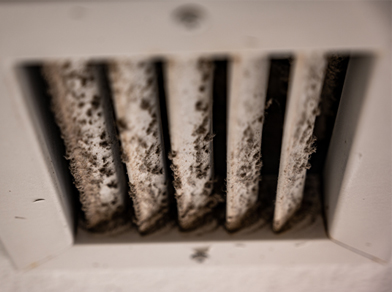
Mold needs three things to grow: moisture, organic matter (it’s not picky), and a dark place, with little to no sunlight. Keeping the humidity low throughout the house restricts the places mold can grow. The indoor air should not feel “sticky,” even on summer days with high humidity outdoors. Use bathroom exhaust fans when showering. If it does feel “sticky,” call your HVAC professional.

Preventative Maintenance Promotes a Mold Free HVAC System

The second thing mold needs are organic material. Mold can bloom on wall paint, chalk, or wooden doors, but it can also feast on collected dust and dander. Matter of fact, the mold pollen will most likely travel together with dust, just waiting for moisture to activate it.

Make sure that you change air filters regularly, every three months at a minimum. Have an HVAC professional service your unit regularly, annually is recommended. Make sure your ductwork is cleaned as needed.

A preventative maintenance inspection can remove dust and repair components that contribute to water leaks. Prevention is much more effective—and safer than remediation.

Mold Removal

Even with these measures, it is not uncommon to find small quantities of mold. So how can you safely remove it?

  • If the affected area is larger than 9 square feet, the problem is large enough to call a mold remediation professional. Smaller areas can be cleaned with proper preparation and technique.
  • Mold spores can be harmful to your respiratory system; be very aware of the danger. Take the precaution of wearing a mask and gloves before cleaning or scrapping mold away.

Find the right cleaning supplies to keep a Mold Free HVAC System

Mold elimination products are readily available. They generally consist of harsh chemicals, so make sure you wear a mask and have good ventilation for the fumes.

If you are looking for an environmentally friendly cleaning solution, start with soap and water; sometimes that is all that is needed. Another easy remedy is baking soda and water; it kills even black mold and acts as a bleaching agent. Since you are near the mold, always wear a mask.

If you have asthma, allergies, or other breathing issues, it is best for you to stay away and let someone else take care of the problem.

Throw Out Food Items

As mold grows on food, it is reproducing well beyond what you see. Some molds produce a toxin, known as mycotoxins, which will make you very ill. If you see mold on a food item, consider it lost and dispose of it; it is not worth the risk.

Interested in a Mold Free HVAC System? 

Let us know how we can help with your indoor air quality concerns and creating a Mold Free HVAC System, call AllCool AC & Heating at 281-238-9292 or contact us via email.

How to Have a Mold-Free HVAC System

HVAC Hurricane Preparedness

HVAC Hurricane Preparedness

HVAC Hurricane Preparedness for Your Home

Hurricane season (June 1 – November 30) has begun for the Texas Gulf Coast, a time of heightened awareness of tropical storms and hurricanes. Municipalities, businesses, and prudent homeowners are planning for the next storm event. Since each hurricane is unique and the damage caused is unpredictable, planning must be based on universal characteristics of severe weather events.

Homeowners must prepare for widespread high winds (gusts over 100 mph) and heavy rainfall over a relatively short period of time. The combination of these weather events leads to power outages, communication delays, travel restrictions, and temporary business closures.

The more people prepare, the quicker the recovery time for entire communities, so do your part and determine your response ahead of time. Here are several quick tips to include on your hurricane guideline list:

HVAC Hurricane Preparedness: Securing Your Home

Whether your plan is to evacuate or shelter in place, here are some suggestions to make sure your home is as secure as you can make it. Understand these are only suggestions. Please follow local emergency guidelines concerning evacuations, since they have the latest in weather updates and community situations.

  1. Purchase and store supplies that will help you protect the most vulnerable exterior surfaces present in your home.
    1. A two-car garage has at least 20 feet of a relatively thin surface with very little support structure; wind gusts can easily blow through your garage door. An open garage door will usually lead to further damage when the wind catches the roof and deposits it in the neighbor’s pool. Prepare to brace your garage door.
    2. Windows and doors are particularly vulnerable to high winds and flying debris. Purchase supplies and cut them to size ahead of time to protect windows and doors from high winds and flying debris.
  2. Inspect your property often, trimming dead limbs and limbs that overhang your home. Significant damage happens with limbs and trees fall in high winds.
  3. Unplug appliances and electronics to prevent damage from power surges due to frequent lightning strikes. A better plan is to turn the power off at the service panel right before the storm hits.
  4. If you need to protect your home from high water, be prepared to move valuables off the floor and park cars on higher ground.

HVAC Hurricane Preparedness: Protecting your Air Conditioner During a Hurricane

To minimize damage to your air conditioner and speed recovery time, follow these suggestions:

  1. Strap the outdoor compressor unit down with hurricane straps. The compressor unit is the only component of your HVAC system outside and exposed to the elements. Hurricane straps secure the lightweight unit to the concrete pad and prevent it from becoming a projectile.

    If your home is prone to flooding, you can further protect the compressor by contacting an HVAC professional to elevate it.

  2. Cover the compressor unit. After preventing the compressor from being blown away, protect it from flying or falling debris. A tarp or compressor cover will keep debris from being blown into the hollow center.

    Keep the cover on until winds subside, but remember to remove it before turning the AC on during recovery. For the compressor to function properly it needs a lot of air to move across the fins to cool the gases inside; without air movement, the high temperature will lead to overheating and failure.

  3. Prior to the storm, pre-cool your home. Set the thermostat a few degrees cooler than normal if you anticipate losing power for an extended period. It will not last forever but wait for the storm out in relative comfort. Keep curtains and blinds closed and doors closed to keep the cool air inside where it belongs.
  4. Once the high winds and heavy rain begins, turn off the air conditioner. Better yet, turn the power off at the electrical service panel. The electrical controls of your HVAC system are susceptible to power surges that can happen during frequent lightning strikes during a hurricane.
  5. After the storm has passed, begin with an inspection of your home inside and out. Remember to inspect for wind and rain damage, flooding, and damage resulting from power surges. If you have lost limbs or trees, proceed with caution and beware of downed power lines. Remember, if the ground is wet and a live power line is in contact with it, you are in danger. Contact your utility company and do not approach.Inspect your roof, windows, and walls. Make your way to the compressor unit and make a careful inspection. Remove the cover and examine the hollow interior. Make sure that leaves or branches have not blown inside to obstruct the fan of full air movement. Examine the electrical and coolant lines entering the home for damage. If any part of the unit is damaged, do not turn on the AC.

    As a part of HVAC Hurricane Preparedness procedures, inspect the electrical service panel and the condenser/blower unit for water damage. If you have experienced flooding or water damage to the HVAC components, do not turn it on until an HVAC technician has inspected it.

  6. If you have any problems or need repairs, contact AllCool AC and Heating for HVAC Hurricane Preparedness assistance right away. The call volume will be high, so anticipate a wait. A professional service call will give you peace of mind. Finding a minor problem now can avoid a major problem later.

Interested in HVAC Hurricane Preparedness for Your Home

If you are interested in learning how we can help with HVAC Hurricane Preparedness for your home, call AllCool AC & Heating at 281-238-9292 or contact us via email.
 

HVAC Hurricane Preparedness


Residential AC Maintenance and Repairs

Residential AC Maintenance

Residential AC Maintenance: 4 Signs You Need To Call All Cool AC

Should I Call My Residential AC Maintenance AC Tech?

In Texas, hot weather is an equalizer. Whether you own a large house or rent a small apartment, AC provides needed relief from scorching heat and high humidity. That is until it stops working properly.

The HVAC system has a limited life span, but most often they show their age or completely fail when you need it the most. Waiting for catastrophic failure leads to dealing with the heat while you wait for repairs or replacement, so here are some signs that it is time to call your Residential AC Maintenance technician:

Icy buildup

Frozen compressors, icy coils, and frosty refrigerant lines are all a product of evaporator coils that are too cold. Nearby moisture in warm air condenses on the cooling coils and freezes. That can make the compressor run hot and burn out. The compressor could also freeze up. If it does, indoor air will feel warmer than it should. The compressor is the most expensive component of your air conditioner. For all of these possible problems, there are no DIY solutions. Call an AC tech promptly!

No/Low Airflow

If you feel cool air coming from the vent, but the flow is weak, it is time to call your AC technician. Little or no airflow could arise from breaks/blockage in your ductwork, blower motor failure, or an electrical switch malfunction. Without the proper tools and training, diagnosing and repairing the problem should be left to the professionals. If repairs are too expensive, replacing the unit might be the most cost-effective choice. A professional can help you make that determination.

Warm Air

If the blower is running and you feel warm air when it should be cool, something is definitely wrong with the AC. The problems range from a coolant leak, electrical switch issue, or a component failure, such as a compressor. Technicians will be able to diagnosis the problem(s) and make appropriate repairs. Again, if repairs are extensive, replacement may be in order. Do not delay to call your technician!

Excess Moisture

Your AC system is designed to remove moisture from the humid summer air, so finding water draining from the condenser is normal. However, if you find an excessive amount of water or anything else (including gases) leaking from the components, it is time to call your technician.

Large pools of water indicate a serious problem that needs to be fixed quickly; the excess water can damage furniture and flooring or lead to mold growth. A coolant leak poses a health risk to your family and will lead to system failure.

Want more information about Residential AC Maintenance? We Can Help!

If you think that your HVAC system is long overdue for its Residential AC Maintenance, call us at 281-238-9292 or contact us via email.
Connect with All Cool AC and Heating on Facebook.

Residential AC Maintenance


11 HVAC Maintenance Tips for Summer

11 HVAC Maintenance Tips for Summer

11 HVAC Maintenance Tips To Complete Before Your Turn on Your Air Conditioner

The air conditioning season in Texas is much longer than the heater season. Finding refuge from high temps and high humidity is what we come to expect from our homes and office.

Sometimes the transition from heating to cooling is short, so here are some steps to take to make sure your system is ready for what lies ahead before turning on the AC.

11 Steps to Follow Before You Turn on the Air Conditioner This Summer

Indoor Equipment Vital to Your Overall Well Being

Begin with your thermostat in the “off” position with the temperature turned to a high setting (around 80 degrees), then check the following:

  1. Look at the thermostat. Is it outdated? There are three types of thermostats:
    1. Manuel or mechanical thermostats—you physically move the dial
    2. Programmable thermostats—you set a timer that makes changes to the system, based on whether anyone is home
    3. Smart thermostats—linked to smartphones, programmable, but you can change settings from a smartphone should plans change

A new thermostat should achieve HVAC Maintenance payback very quickly.

  1. Inspect any exposed ductwork for wear or gaps. This will lead to energy efficiencies and potential hot and cold spots.
  2. Check air vents and returns. Make sure drapes, furniture or accessories are not covering openings. This adds stress to the HVAC system and can lead to component failure.
  3. Check the drain line. Cooling coils that come in contact with humid air will collect the humidity in a drain pan. Clean the drain pan prior to turning on the system to ensure collected dirt does not clog the drain line.

    Pour one cup of chlorine bleach down the drain line, then flush with a gallon of water to keep the drain line unobstructed.

  4. Change your air filter quarterly. The filter should be changed every three months or as recommended by the manufacturer. Changing the filter at the beginning of the cooling season is a good reminder.
  5. Check the electrical circuit to make sure the unit is on. Check the circuit breaker or fuse box.
  6. Be sure the power is powered “on.”The furnace and air conditioner are usually one unit.
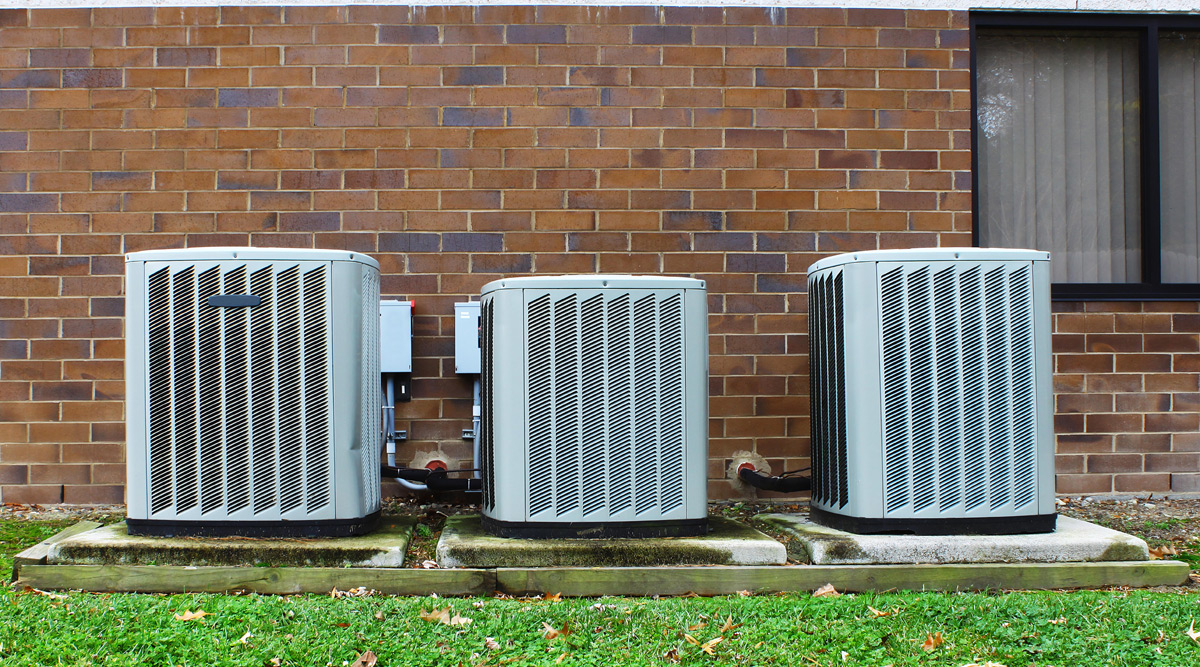
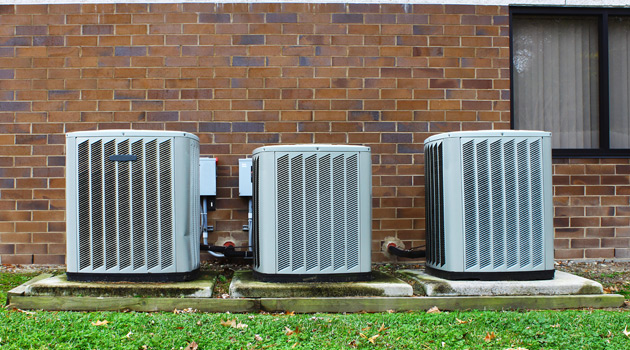
  7. Inspect the outdoor condenser unit. The outdoor condenser unit needs significant ventilation. Air is drawn in and up through the unit. Leaves, tall grass, and vines can block the floor of air, making the system work harder or fail.

    Make sure the unit is intact and nothing has blown inside the condenser.

  8. Inspect the outdoor refrigerant lines. These lines should be enclosed with insulation to ensure system efficiency. If you see damage or wear, call a professional for service before using your system.
  9. Inspect the outdoor wiring for wear or damage. Repairs to wiring should be done by a professional.
  10. Air conditioner units have a life span. Proper maintenance will extend the life of most components, but eventually, you will need to retire the system.

    The bright side is, new AC units are considerably more energy-efficient and can save 20 to 40% on your cooling energy cost.

Conclusion

Prior to the transition between heating and cooling is a proactive step to ensure your AC system functions properly and efficiently.

“Hoping and wishing” is not an HVAC Maintenance plan of action. Inspect your system and get simple repairs or call for service before hot weather arrives.

Want more information about HVAC Maintenance? We Can Help!

If you are considering an HVAC Maintenance program, call us at 281-238-9292 or contact us via email.
Connect with All Cool AC and Heating on Facebook.


8 Affordable Air Conditioning Efficiency Tips

8 Affordable Air Conditioning Efficiency Tips

Air Conditioning Efficiency Tips to Reduce Utility Bills

According to the Department of Energy, conditioning the air in your home, both heating and cooling takes the largest single percentage of your energy bill—between 48 and 52% of the total bill. With the long cooling months right around the corner, here are 8 no-cost methods of reducing your AC costs.

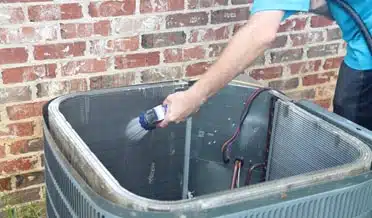
  1. Clean around the AC condenser unit outside. Since the fan is pulling air through the aluminum fins, it is suctioning leaves, grass clippings, and debris between the fins. Use a hose and clean the fins thoroughly to keep the unit from overheating.
  2. Vacuum clean the indoor vents and move anything that might cover the vents. Open vents allow the free flow of that “oh so nice” air right where you need it. Covered vents restrict airflow and create hot spots.
  3. Program your thermostat if possible. It might take a little time for you to program, but it can make a big difference. Here’s how:
    1. Department of Energy estimates a 1% savings per degree for an 8-hour span. If you turn the AC temp UP 5 degrees for eight hours, you will save 5% of the cooling cost for the day.
    2. If you program your thermostat to increase the temperature in your home while it is vacant during work hours, you can achieve these cost savings without feeling it at all. Schedule the AC to cool it off on your drive home. (The same savings holds true during heating months as well.)
  4. Keep lamps, TVs, and other heat-producing appliances 3’ away from your thermostat. The heat of the device will give the thermostat a false reading, keeping the AC unit on longer.
  5. Close your blinds and curtains during the heat of each summer day. The summer sun warms the house and drives the AC cost way up. When you arrive home from work, open the curtains and enjoy the less harsh evening rays.
  6. Clear the drain lines coming from the evaporator coil and pan. This is on the inside, at the AC/furnace unit, a hose or PVC line running to a drain. Pour a cup of bleach in the line and chase it with a gallon of water to remove debris and organic matter. This avoids the water overflowing from the pan and leaking from the unit.
  7. Avoid using heating-producing appliances, such as the dryer, oven, and dishwasher during the heat of the day. Wait until the evening hours, when the AC unit has less of a load and can handle the rise in temperature.
  8. If your home has uninsulated ductwork in unconditioned spaces, such as attics or crawlspaces, insulating the ducts will be a very low-cost/very effective cost-saving measure.

Money-saving tips don’t always require spending a lot of money when it comes to your HVAC system.

Want more information about Air Conditioning Efficiency? We Can Help!

If you are considering to better your Air Conditioning Efficiency, call us at 281-238-9292 or contact us via email.
Connect with All Cool AC and Heating on Facebook.

8 Affordable Air Conditioning Efficiency Tips

6 HVAC Efficiency Tips for this Fall

6 HVAC Efficiency Tips for this Fall

HVAC Efficiency Tips

Inefficient HVAC systems not only compromise your comfort level, they hurt you financially. Keeping your HVAC system operating at its highest level will improve your home’s indoor temperatures, and it will also save you money.

Here are a few HVAC efficiency tips to keep your home’s comfort level at its best.

HVAC Efficiency: Keep Evaporator and Condenser Coils Clean

Dirt and debris accumulate around your condenser and evaporator coils. This build-up will decrease your systems’ ability to transfer heat and its cooling ability. Cleaning these components on a regular basis will keep your system running efficiently.

HVAC Efficiency: Replace Your Air Filters

Clogged or dirty AC filters will restrict the airflow of your unit. Fixing a disruption to airflow can create a great increase in energy efficiency. We strongly recommend changing your air filter every 30-90 days depending on the filter rating.

HVAC Efficiency: Poor HVAC Maintenance

Most homeowners neglect proper HVAC maintenance. Since your system components are stowed away and hidden, they have a tendency to become, “out of sight and out of mind.” Your AC and heating system efficiency can decrease by five percent per year.

To prevent further wear and tear, and to prolong the life of your HVAC system, we recommend you schedule regular maintenance.

HVAC Efficiency: Compromised Ductwork

Damaged or worn ductwork can certainly cause inefficient heating and cooling. Air leaking out of your ductwork into your attic will definitely cause poor performance and higher utility bills. A thorough inspection of your ductwork by an experienced technician can save you a great deal of money.

HVAC Efficiency: Aging HVAC Systems

If you notice decreased efficiency in your A/C even with proper maintenance, it may be the case that your unit is simply nearing the end of its lifespan. Most air conditioners can last anywhere from 10 to 15 years, so a replacement may be in order if your unit is older than that.

How Do You Test Your HVAC Efficiency and Performance

On a day that is above 80 degrees, allow your AC unit to run for at least 15 minutes consistently. Place a thermometer on a supply register closest to the unit and let it sit for 5 minutes. Repeat the process at a return vent.

An efficient HVAC system cools air 14 to 20 degrees from the temperature that it entered your system. If your HVAC system is not able to do this, its performance and efficiency are at best problematic. If this is the case, you should contact us immediately to schedule an HVAC maintenance appointment.

Want more information about HVAC Efficiency? We Can Help!

If you are considering preventative HVAC system maintenance services to better your HVAC Efficiency, call us at 281-238-9292 or contact us via email.
Connect with All Cool AC and Heating on Facebook

HVAC Efficiency


All Cool A/C’s Vice President Honored as Top Forty Under 40!

Residential Air Conditioning and Heating Specialist

Cody Bellamy, Vice President

Cody Bellamy’s career HVAC goals can be summed up into three items: happy employees, superior customer service, and community outreach. The vice president of All Cool A/C & Heating takes those items very seriously. “I am a firm believer that happy employees are productive employees, which is why I strive to create and maintain a culture in our company that makes our employees excited to come to work each day,” Bellamy said.

“I also want to change the negative preconceived stigma customers have with HVAC contractors by providing exceptional customer service. This means timely service by well-trained technicians at an affordable price as well as being sympathetic to their needs and providing honest evaluations of a customer’s options to see what makes the most sense for them and their family.”

“It is also very important to me to give back to the community, not only monetarily but also with our time as a company,” he continued.

Click to Download the Full Article

Bellamy received his Texas Class A State contractor’s license on his very first attempt at the young age of As the company’s vice president, he oversees sales, accounting, customer service, equipment purchasing, software implementation, and advertising. He has helped grow the company from five employees to 17 while doubling the annual revenue.

“As a father of three, I hope to inspire my children with my hard work, honesty, and dedication to my craft, just as my father did for me,” he said.