Energy Efficient Heating Tips for Winter

Energy Efficient Heating

Energy Efficient Heating Tips for Homeowners

When the utility bill arrives, there is often a quick twinge of panic and a desire to find Energy Efficient Heating methods to result in energy lower costs. Oh, and if we could find some Energy Efficient Heating hacks that cost absolutely nothing, that would be even better! Well, hang on, because we have a few real Energy Efficient Heating tips. You might not be able to use them all, but see how many will help.

Energy Efficient Heating: Solar Energy Hacks. The sun delivers 10,000 times more energy to the earth than the amount of energy that people use. If you stand in front of a window on a cold, sunny day and you will appreciate passive solar gain. Capturing a portion of the sun’s energy inside your home will save you money.

  • Winter sun is low in the sky during the winter and high in the sky in the summer. A low sun pours more sunlight into your home on winter days.
  • The sun allowed inside warms the flooring, the furniture, and the walls. This energy radiates into the air in your home, raising the temperature by as much as 150 on a sunny day.
  • Windows are the key to solar gain. New double-paned windows trap heat in the space between glass panes and that costs nothing. Open the drapes and blinds during the day on South-facing windows between 9 am and 3 pm on sunny days. Close the drapes and blinds after the sun sets to reduce the amount of heat escaping into the cold, dark night.

Energy Efficient Heating: Fan Hacks. To maximize solar gain, move the free solar heat with ceiling fans. The wintertime setting for ceiling fans turns the fan in a clockwise rotation; this pulls air up and pushes the warm air toward the outside of the room, and potentially into other areas of the house. Set the fan at the lowest speed and move this air around. Also, use kitchen and bathroom exhaust fans sparingly. The air being pulled outside is warm, air—the kind of air you are trying to keep indoors.

Energy Efficient Heating: Thermostat Hacks. The thermostat is a switch that turns the heat on or off based on a pre-determined temperature setting. All but the oldest thermostats are programmable; that is, you can program the switch to change the temperature on a timed schedule. How does that help?

  • Be slow to switch the heat (or AC) on at the season change. Develop a little tolerance for a cooler temperature setting. Set the temperature at the lowest comfortable setting for your family.
  • The EPA has demonstrated that if you lower your thermostat setting by 7 to 10 degrees for a minimum of 8 hours, you will save 10% on your heating bill.1  That does not cost a thing and you enter the scheduled changes only one time.
  • There are two ideal times to program a reduction in temperature for 8 hours: overnight, while everyone is sleeping, and during the day, while the whole family is away from home. Try a few different schedules to see which works for your family.

Energy Efficient Heating: Appliance Hacks. Some of your household appliances create significant heat for cleaning and cooking. Wash dishes and clothes later in the day to fully appreciate the heat they generate. Exhaust the hot, moist air produced by showers during the summer, but retain it in the winter as much as possible. Cook and bake to your heart’s content on cold days; exhaust only the most disagreeable cooking odors.

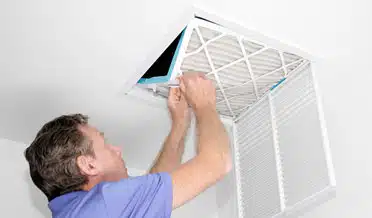
Energy Efficient Heating: Maintenance Hacks. Make sure to follow your manufacturer’s user guides concerning regularly scheduled preventative maintenance visits; annual maintenance is usually the guideline. Be sure to change your air filter regularly, at least every three months. These steps keep your HVAC system functioning efficiently and this saves you money.

Have questions about Energy Efficient Heating? We can help!

Schedule your free Energy Efficient Heating by calling AllCool AC & Heating at 281-238-9292 or contact us via email.

Energy Efficient Heating

1 https://www.energy.gov/energysaver/programmable-thermostats#:~:text=Thermostat%20Operation&text=You%20can%20easily%20save%20energy,asleep%20or%20away%20from%20home

5 Essential AC Maintenance Tips

5 Essential AC Maintenance Tips

AC Maintenance Tips for Homeowners

Heat and humidity seem to be our constant companions during the summer months. Your air conditioner is a critical key to keeping your family comfortable during the long Texas cooling system. We often share tips with homeowners for maintaining air conditioners, but it may be good to know there are more steps you can take to help keep your house cool beyond your air conditioner. While these steps cannot take the place of AC, they certainly can help. Let’s take a look at some of these AC Maintenance steps.

“Use” Sunlight Wisely

Everyone loves natural light flowing into their home. However, summertime sunlight equates to an increase in indoor temperature. Closing blinds and/or drapes during the day will reduce sunlight and keep your home cooler during the hottest part of the day. Tree shade and directional facing will be different for each home; know how to keep your home cooler.

Plan Meals

Oven-cooked meals might be perfect during cooler months, but they put stress on your AC and warm your kitchen significantly. There are several options available to keep your kitchen cooler.

  • Set one day aside to cool meals for the week. This reduces the number of hot days in the kitchen
  • Plan to cook outdoors.
  • Use energy-saving appliances, such as air fryers and electric pressure cookers

Schedule Cleaning

Clothes dryers and dishwashers contribute a little bit of heat and humidity to your home and impact comfort. If you plan to run these devices in the evening hours, during the coolest part of the day, they should have a minimal impact on your comfort and help with energy conservation.

Redirect Your Ceiling Fans

Ceiling fans will not lower the air temperature but moving air speeds evaporation and therefore the air feels cooler. On the core of each ceiling fan is a small toggle switch that changes the direction of the fan. When the fan turns in the counterclockwise direction, it pushes air down and creates a cool breeze. Make sure each fan is turning counterclockwise during the summer to keep your home at peak comfort.

Address Problem Areas

If one or more rooms are consistently warmer than the rest of the house, don’t ignore the fact and research the root cause. Inspect every surface:

  • Check the attic for poor insulation
  • Check the windows and doors for leaks
  • Check the ducts to make sure they are intact and not leaking.

Of course, taking care of your air conditioner goes a long way toward keeping your home comfortable. Every mechanical system needs maintenance, and your air conditioner is no different. Cleaning the condenser coil, and ducts, and changing air filters are a few maintenance tasks that help your AC run efficiently. A regular preventative AC Maintenance inspection is recommended by your AC manufacturer.

Give All Cool AC a call to schedule an annual preventative AC maintenance visit with an HVAC professional.

Let us help with your AC Maintenance

Schedule your AC Maintenance assessment by calling AllCool AC & Heating at 281-238-9292 or contact us via email.
5 Essential AC Maintenance Tips

6 Tips HVAC Maintenance Tips for Homeowners

6 Tips HVAC Maintenance Tips for Homeowners

6 Tips HVAC Maintenance Tips to Better Energy Efficiency

Air conditioning is such a comfort during the summertime; stepping out of oppressive heat and humidity into a cool, dry environment is both welcoming and relaxing. The converse is also true.

Stepping into a home and expecting air conditioning but being disappointed is very stressful and troubling. Wise homeowners don’t just assume their AC will work but take the HVAC Maintenance extra steps to ensure it is kept in good working order.

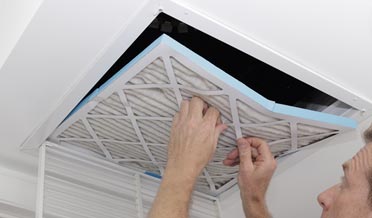
Change Your Air Filter Regularly

A dirty, clogged air filter leads to two major problems for air conditioners. First, it causes your blower motor to work harder than it should. While the blower fan moves large volumes of air—the entire volume of your home every 2 or 3 minutes—a clogged filter reduces the airflow, and the blower motor must work harder to complete its task.

Second, the evaporator coils bring very cold refrigerant gas into the evaporator chamber. Warm air from the house is being drawn through the filter and exchanged the heat for cold.

Reduced airflow causes humidity to freeze on the coils and this reduces the exchange of heat and cold. Expect warmer air from the air conditioner with an extremely clogged filter.

 Clean Your Evaporator Coils and Drain Pan

In addition to exchanging heat with cold, the evaporator removes humidity from the air when it condenses on the coils. By tripping the circuit breaker-marked AC and removing a few bolts, you can access the evaporator chamber and do a little maintenance. First, observe the coils—often a V-shape—and vacuum away any accumulated dust.

Second, observe the drain pan, looking for debris or algae buildup. Carefully pour a cup of bleach or vinegar into the drain pan as a deterrent to algae growth. You may need a wet/dry shop vacuum to clean out algae buildup in the drain lines. After you have returned the chamber cover and flip the circuit breaker back to the ON position.

Clean Your Condenser Unit

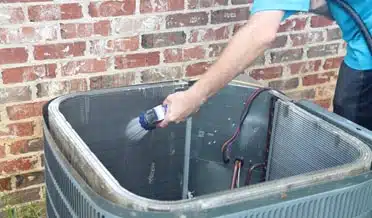
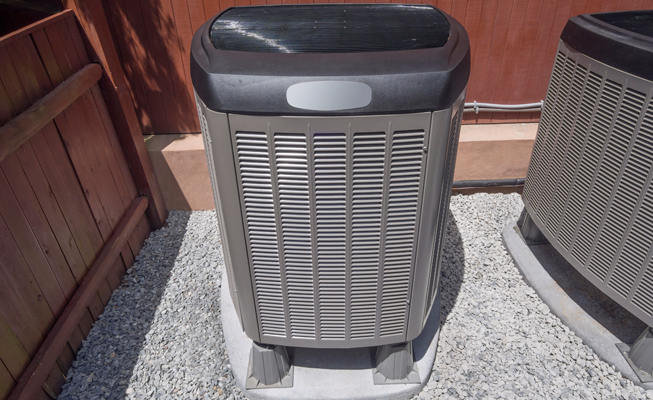
Stepping outside, locate the air conditioner condenser unit, a small, boxy component with a prominent fan on the top. The refrigerant gas has collected heat from your home in the evaporator chamber and brings it outdoors for release. The entire box is composed of a network of tubes with very small fins.

Airflow through this network transfers the heat to the moving air and cools down quickly. Quickly, unless the airflow is restricted by the accumulation of dirt, grass clippings, and debris. Use a garden hose—not a power washer—to gently clean the spaces between the tubes and promote good airflow. Trim any hedges and remove any debris within about 3 feet of the condenser.

Check Vents and Registers

In order for air conditioning to work properly, air must flow in large volumes. A normal 15-minute cooling cycle will move the entire volume of your home 7 or 8 times, maybe more. It moves that volume of air unless, of course, the vents and registers in the home are covered. Check each room and find one or more registers on or along the floor.

Rooms with more square footage will have more than one register. Make sure they are not covered by furniture or drapes. Each level of the home will have one or more return air vents.

Observe the vents about ¾ of the way up walls, perhaps in hallways or open spaces. Make sure that furniture and drapes do not cover your vents and reduce air movement.

Program The Thermostat for Summertime

Many homes have programmable or Smart thermostats. This allows homeowners to customize the temperature settings to match the family schedule and comfort levels. Summertime schedules change, so make sure to keep the settings adjusted to the season.

Consider adjusting the setting while the family is sleeping or away, reducing the demand for energy. Create a 30-minute buffer right before the alarm clock sounds or the first family member returns.

Plan an Annual HVAC Maintenance Tune-up

Scheduling a visit from an HVAC Maintenance professional to clean, inspect, and test the system is a sure way to keep your system running for as long as possible. The additional HVAC Maintenance care ensures that components function properly, gas levels are appropriate, and connections are maintained. This HVAC Maintenance TLC lengthens the serviceable life of your entire system.

Time for HVAC Maintenance?

Schedule your upcoming HVAC maintenance appointment by calling AllCool AC & Heating at 281-238-9292 or contact us via email.
6 Tips HVAC Maintenance Tips for Homeowners

5 AC Tune Up Tips to Save You Money

5 AC Tune Up Tips to Save You Money

5 Money-Saving Tips for Regularly Schedule AC Tune Ups

Spring is here! That is a short buffer time between cold weather and the hot and humid weather of summer. This is an excellent time to have your air conditioner serviced to make sure it is in great shape to keep your family comfortable and safe all summer long.

You hear HVAC professionals say that all the time and you might wonder “Does it make a difference?” Since it might seem like a little self-service for All Cool to say “yes,” we can give you an unbiased, expert opinion with nothing to gain from your response—the U.S. Department of Energy.1

Here are 5 motivations for you to service your AC this spring.

AC Tune Up Tip 1: Lengthen Your Warranty

If your AC unit has a warranty, it most likely requires an annual preventative maintenance service; check your documents. While a breakdown during the early years of service is unusual, keeping the warranty valid is important.

AC Tune Up Tip 2: Increase Useful Service Life

The #1 way to lengthen the service life of your air conditioner is to have it cleaned and serviced regularly. Service life claims vary, but here are a few general truths:

  • Furnaces generally last a few years longer than the air conditioner, but they are usually replaced at the same time.
  • Service life varies a lot, between 15 and 30 years. Again, the #1 difference-maker is regular maintenance.
  • Regular maintenance can add 5 or more years to service life compared to little or no maintenance.

AC Tune Up Tip 3: Decreased Repairs

As air conditioners age, parts will wear out and fail due to functional stress. The leading cause of this stress on any AC unit is dust and dirt that infiltrates various components. The two major functions of AC preventative maintenance are 1) removing dust and dirt from remote places, and 2) inspecting for damage and wear.

A well-maintained AC unit will experience fewer breakdowns and repairs over the service life since the wear is reduced and discovered early.

AC Tune Up Tip 4: Increase Efficiency

With stress-causing dirt and dust removed, your air conditioner will function better, from the compressor to the blower motor. With every AC cycle, your family will experience greater comfort, even during peak cooling periods.

AC Tune Up Tip 5: Decreased Energy Bills

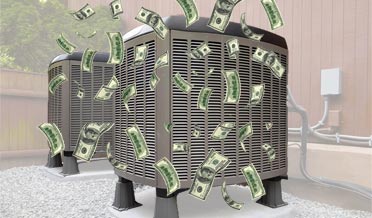
Now more than ever, reducing utility bills will benefit the household budget. A well-maintained AC, functioning more efficiently, will reduce the cost of cooling your home all season long.

Regular maintenance provides more benefits such as improved indoor air quality and cleaner surfaces, but hopefully, these five reasons will motivate you to care for your AC while it keeps you cool and comfortable this summer.

Have Questions About AC Tune Up Tips?

Let us know how we can help with scheduling your AC Tune Up, call AllCool AC & Heating at 281-238-9292 or contact us via email.
5 AC Tune Up Tips to Save You Money

1 https://www.energy.gov/energysaver/maintaining-your-air-conditioner#:~:text=An%20air%20conditioner’s%20filters%2C%20coils,while%20energy%20use%20steadily%20increases


Tips to Have a Mold Free HVAC System in Your Home

How to Have a Mold-Free HVAC System

How to Have a Mold Free HVAC System

If the problem of mold keeps reoccurring, please consult with a mold remediation professional.

Your heating, ventilation, and air conditioning system (HVAC) are designed to heat and cool, freshen, clean, and dehumidify the air in your home for your protection and comfort. When the system ceases to provide one or more of these functions it can lead to a mold infestation.

A serious mold infestation is hard to eradicate and can be very harmful to your family; do not wait—call a professional.

Since it is so serious, let’s consider some ways to make sure mold does not become a problem inside your home. Let’s start with your HVAC system.

Humidity Regulation is the Key to a Mold Free HVAC System

The U.S. Consumer Product Safety Commission determines the ideal humidity for indoor air is between 30 and 50% humidity; expect between 30-40% in the winter and between 40 and 50% in the summer months.

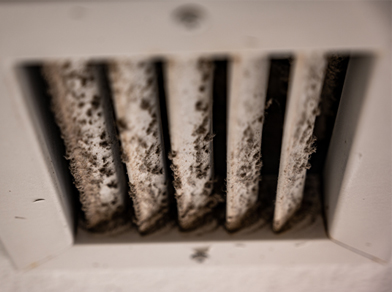
Mold needs three things to grow: moisture, organic matter (it’s not picky), and a dark place, with little to no sunlight. Keeping the humidity low throughout the house restricts the places mold can grow. The indoor air should not feel “sticky,” even on summer days with high humidity outdoors. Use bathroom exhaust fans when showering. If it does feel “sticky,” call your HVAC professional.

Preventative Maintenance Promotes a Mold Free HVAC System

The second thing mold needs are organic material. Mold can bloom on wall paint, chalk, or wooden doors, but it can also feast on collected dust and dander. Matter of fact, the mold pollen will most likely travel together with dust, just waiting for moisture to activate it.

Make sure that you change air filters regularly, every three months at a minimum. Have an HVAC professional service your unit regularly, annually is recommended. Make sure your ductwork is cleaned as needed.

A preventative maintenance inspection can remove dust and repair components that contribute to water leaks. Prevention is much more effective—and safer than remediation.

Mold Removal

Even with these measures, it is not uncommon to find small quantities of mold. So how can you safely remove it?

  • If the affected area is larger than 9 square feet, the problem is large enough to call a mold remediation professional. Smaller areas can be cleaned with proper preparation and technique.
  • Mold spores can be harmful to your respiratory system; be very aware of the danger. Take the precaution of wearing a mask and gloves before cleaning or scrapping mold away.

Find the right cleaning supplies to keep a Mold Free HVAC System

Mold elimination products are readily available. They generally consist of harsh chemicals, so make sure you wear a mask and have good ventilation for the fumes.

If you are looking for an environmentally friendly cleaning solution, start with soap and water; sometimes that is all that is needed. Another easy remedy is baking soda and water; it kills even black mold and acts as a bleaching agent. Since you are near the mold, always wear a mask.

If you have asthma, allergies, or other breathing issues, it is best for you to stay away and let someone else take care of the problem.

Throw Out Food Items

As mold grows on food, it is reproducing well beyond what you see. Some molds produce a toxin, known as mycotoxins, which will make you very ill. If you see mold on a food item, consider it lost and dispose of it; it is not worth the risk.

Interested in a Mold Free HVAC System? 

Let us know how we can help with your indoor air quality concerns and creating a Mold Free HVAC System, call AllCool AC & Heating at 281-238-9292 or contact us via email.
How to Have a Mold-Free HVAC System

HVAC Hurricane Preparedness

HVAC Hurricane Preparedness

HVAC Hurricane Preparedness for Your Home

Hurricane season (June 1 – November 30) has begun for the Texas Gulf Coast, a time of heightened awareness of tropical storms and hurricanes. Municipalities, businesses, and prudent homeowners are planning for the next storm event. Since each hurricane is unique and the damage caused is unpredictable, planning must be based on universal characteristics of severe weather events.

Homeowners must prepare for widespread high winds (gusts over 100 mph) and heavy rainfall over a relatively short period of time. The combination of these weather events leads to power outages, communication delays, travel restrictions, and temporary business closures.

The more people prepare, the quicker the recovery time for entire communities, so do your part and determine your response ahead of time. Here are several quick tips to include on your hurricane guideline list:

HVAC Hurricane Preparedness: Securing Your Home

Whether your plan is to evacuate or shelter in place, here are some suggestions to make sure your home is as secure as you can make it. Understand these are only suggestions. Please follow local emergency guidelines concerning evacuations, since they have the latest in weather updates and community situations.

  1. Purchase and store supplies that will help you protect the most vulnerable exterior surfaces present in your home.
    1. A two-car garage has at least 20 feet of a relatively thin surface with very little support structure; wind gusts can easily blow through your garage door. An open garage door will usually lead to further damage when the wind catches the roof and deposits it in the neighbor’s pool. Prepare to brace your garage door.
    2. Windows and doors are particularly vulnerable to high winds and flying debris. Purchase supplies and cut them to size ahead of time to protect windows and doors from high winds and flying debris.
  2. Inspect your property often, trimming dead limbs and limbs that overhang your home. Significant damage happens with limbs and trees fall in high winds.
  3. Unplug appliances and electronics to prevent damage from power surges due to frequent lightning strikes. A better plan is to turn the power off at the service panel right before the storm hits.
  4. If you need to protect your home from high water, be prepared to move valuables off the floor and park cars on higher ground.

HVAC Hurricane Preparedness: Protecting your Air Conditioner During a Hurricane

To minimize damage to your air conditioner and speed recovery time, follow these suggestions:

  1. Strap the outdoor compressor unit down with hurricane straps. The compressor unit is the only component of your HVAC system outside and exposed to the elements. Hurricane straps secure the lightweight unit to the concrete pad and prevent it from becoming a projectile.

    If your home is prone to flooding, you can further protect the compressor by contacting an HVAC professional to elevate it.

  2. Cover the compressor unit. After preventing the compressor from being blown away, protect it from flying or falling debris. A tarp or compressor cover will keep debris from being blown into the hollow center.

    Keep the cover on until winds subside, but remember to remove it before turning the AC on during recovery. For the compressor to function properly it needs a lot of air to move across the fins to cool the gases inside; without air movement, the high temperature will lead to overheating and failure.

  3. Prior to the storm, pre-cool your home. Set the thermostat a few degrees cooler than normal if you anticipate losing power for an extended period. It will not last forever but wait for the storm out in relative comfort. Keep curtains and blinds closed and doors closed to keep the cool air inside where it belongs.
  4. Once the high winds and heavy rain begins, turn off the air conditioner. Better yet, turn the power off at the electrical service panel. The electrical controls of your HVAC system are susceptible to power surges that can happen during frequent lightning strikes during a hurricane.
  5. After the storm has passed, begin with an inspection of your home inside and out. Remember to inspect for wind and rain damage, flooding, and damage resulting from power surges. If you have lost limbs or trees, proceed with caution and beware of downed power lines. Remember, if the ground is wet and a live power line is in contact with it, you are in danger. Contact your utility company and do not approach.Inspect your roof, windows, and walls. Make your way to the compressor unit and make a careful inspection. Remove the cover and examine the hollow interior. Make sure that leaves or branches have not blown inside to obstruct the fan of full air movement. Examine the electrical and coolant lines entering the home for damage. If any part of the unit is damaged, do not turn on the AC.

    As a part of HVAC Hurricane Preparedness procedures, inspect the electrical service panel and the condenser/blower unit for water damage. If you have experienced flooding or water damage to the HVAC components, do not turn it on until an HVAC technician has inspected it.

  6. If you have any problems or need repairs, contact AllCool AC and Heating for HVAC Hurricane Preparedness assistance right away. The call volume will be high, so anticipate a wait. A professional service call will give you peace of mind. Finding a minor problem now can avoid a major problem later.

Interested in HVAC Hurricane Preparedness for Your Home

If you are interested in learning how we can help with HVAC Hurricane Preparedness for your home, call AllCool AC & Heating at 281-238-9292 or contact us via email.


HVAC Hurricane Preparedness


Residential AC Maintenance and Repairs

Residential AC Maintenance

Residential AC Maintenance: 4 Signs You Need To Call All Cool AC

Should I Call My Residential AC Maintenance AC Tech?

In Texas, hot weather is an equalizer. Whether you own a large house or rent a small apartment, AC provides needed relief from scorching heat and high humidity. That is until it stops working properly.

The HVAC system has a limited life span, but most often they show their age or completely fail when you need it the most. Waiting for catastrophic failure leads to dealing with the heat while you wait for repairs or replacement, so here are some signs that it is time to call your Residential AC Maintenance technician:

Icy buildup

Frozen compressors, icy coils, and frosty refrigerant lines are all a product of evaporator coils that are too cold. Nearby moisture in warm air condenses on the cooling coils and freezes. That can make the compressor run hot and burn out. The compressor could also freeze up. If it does, indoor air will feel warmer than it should. The compressor is the most expensive component of your air conditioner. For all of these possible problems, there are no DIY solutions. Call an AC tech promptly!

No/Low Airflow

If you feel cool air coming from the vent, but the flow is weak, it is time to call your AC technician. Little or no airflow could arise from breaks/blockage in your ductwork, blower motor failure, or an electrical switch malfunction. Without the proper tools and training, diagnosing and repairing the problem should be left to the professionals. If repairs are too expensive, replacing the unit might be the most cost-effective choice. A professional can help you make that determination.

Warm Air

If the blower is running and you feel warm air when it should be cool, something is definitely wrong with the AC. The problems range from a coolant leak, electrical switch issue, or a component failure, such as a compressor. Technicians will be able to diagnosis the problem(s) and make appropriate repairs. Again, if repairs are extensive, replacement may be in order. Do not delay to call your technician!

Excess Moisture

Your AC system is designed to remove moisture from the humid summer air, so finding water draining from the condenser is normal. However, if you find an excessive amount of water or anything else (including gases) leaking from the components, it is time to call your technician.

Large pools of water indicate a serious problem that needs to be fixed quickly; the excess water can damage furniture and flooring or lead to mold growth. A coolant leak poses a health risk to your family and will lead to system failure.

Want more information about Residential AC Maintenance? We Can Help!

If you think that your HVAC system is long overdue for its Residential AC Maintenance, call us at 281-238-9292 or contact us via email.
Connect with All Cool AC and Heating on Facebook.

Residential AC Maintenance


HVAC System: Top 5 Causes of HVAC Failure

HVAC System

HVAC System Tips for Optimal Efficiency

Your home’s HVAC system is composed of several mechanical components working together, designed to keep your home safe and comfortable. It provides adequate ventilation, clean air and regulates temperature throughout your living space.

When each component functions properly you barely notice, but when something is wrong, everyone knows.

When your system fails you are aware of the discomfort because of seasonal temperatures. However, malfunctioning heating and air conditioning can also lower indoor air quality, affect health and raise energy costs unnecessarily. If your system fails, check these five things before you call an HVAC professional.

The Top 5 Causes of HVAC Failure

Check the Electrical Breaker

If the HVAC system will not work at all, go to the electrical panel and check for a tripped breaker. The panel door depicts which breaker supplies the HVAC system—usually, more than one breaker supplies the system. If the breaker is tripped, it is in a neutral position.

If you wiggle it gently, it will move both right and left. Turn the breaker off and then turn it to the “on” position. In both the on and off position the breaker will be firm, with no more wiggle.

If this is the only problem, the breaker will restore power to your system and it will return to normal use. The breaker might have tripped for a number of reasons. If the breaker trips again, contact a professional electrician to investigate the problem. It is no longer a DIY project.

Dirty Air Filters

The easiest DIY preventative maintenance task you can do for your system is to change the air filter. The filter will be positioned for easy accessibility and collects dust and pollutants before the air is heated or cooled. This keeps dust out of vital mechanical components and traps them before they can be redistributed.

An air filter will continue to collect pollutants even when it is dirty; however, the dust and pollen build up over time and slows the airflow, which and makes the blower motor work much harder. Plan on changing your filter at least every 3 months, but be aware that your home may require more frequent changes.

Factors such as living on a dusty road, near construction or having several pets might necessitate frequent filter changes.

Filters are readily available at hardware and DIY centers. Air filters come in a variety of materials, including washable filters for reuse. Explore your options.

Impeded Air Flow

The duct system transports clean conditioned air throughout the home, unless something is blocking the airflow. Occasionally a homeowner will not notice a room vent and place furniture or accessories on the vent, blocking airflow. Also, check the dampers on the room vents to ensure they are in the open position.

Your ductwork system may also have dampers in the main supply lines which regulate airflow. These dampers are designed to balance the flow of air for seasonal changes. If dampers are not balanced properly, you will experience uneven heat or AC in some rooms, while proper dampening will heat and cool rooms evenly. Uneven heating and cooling adds stress to your HVAC system and shortens system life.

Check the Thermostat

Thermostats are equivalent to an on/off switch, determined by air temperature in a room, typically the most used room in the house. If the switch is not functioning properly the entire system will not work properly.

Fortunately, replacing a thermostat is a simple and relatively inexpensive fix. Unfortunately, many homeowners are not prepared to diagnosis the problem.

If you suspect the thermostat might be the culprit, consult your professional for an inspection. In many cases, a new programmable or smart thermostat will help lower your utility bills and increase your comfort.

A Refrigerant Leak

When the outside temperature rises and your AC “can’t keep up,” it is definitely time to call your HVAC professional and have the refrigerant level checked. Your AC unit requires a gas coolant in a contained circuit and any crack or flaw in the circuit will allow the gas to escape.

Often the refrigerant escapes gradually resulting in decreasing performance and leading to a failure to cool. The decrease in performance is serious, as it causes the AC components to work extremely hard and leads to complete failure.

The HVAC professional might be able to find the source of the leak and replace the refrigerant. Replacing the refrigerant often makes an immediate, noticeable change.

Want more information about HVAC System Tips for Optimal Efficiency

If you are considering to better your Air Conditioning Efficiency, call us at 281-238-9292 or contact us via email.
Connect with All Cool AC and Heating on Facebook.

HVAC System

11 HVAC Maintenance Tips for Summer

11 HVAC Maintenance Tips for Summer

11 HVAC Maintenance Tips To Complete Before Your Turn on Your Air Conditioner

The air conditioning season in Texas is much longer than the heater season. Finding refuge from high temps and high humidity is what we come to expect from our homes and office.

Sometimes the transition from heating to cooling is short, so here are some steps to take to make sure your system is ready for what lies ahead before turning on the AC.

11 Steps to Follow Before You Turn on the Air Conditioner This Summer

Indoor Equipment Vital to Your Overall Well Being

Begin with your thermostat in the “off” position with the temperature turned to a high setting (around 80 degrees), then check the following:

  1. Look at the thermostat. Is it outdated? There are three types of thermostats:
    1. Manuel or mechanical thermostats—you physically move the dial
    2. Programmable thermostats—you set a timer that makes changes to the system, based on whether anyone is home
    3. Smart thermostats—linked to smartphones, programmable, but you can change settings from a smartphone should plans change

A new thermostat should achieve HVAC Maintenance payback very quickly.

  1. Inspect any exposed ductwork for wear or gaps. This will lead to energy efficiencies and potential hot and cold spots.
  2. Check air vents and returns. Make sure drapes, furniture or accessories are not covering openings. This adds stress to the HVAC system and can lead to component failure.
  3. Check the drain line. Cooling coils that come in contact with humid air will collect the humidity in a drain pan. Clean the drain pan prior to turning on the system to ensure collected dirt does not clog the drain line.

    Pour one cup of chlorine bleach down the drain line, then flush with a gallon of water to keep the drain line unobstructed.

  4. Change your air filter quarterly. The filter should be changed every three months or as recommended by the manufacturer. Changing the filter at the beginning of the cooling season is a good reminder.
  5. Check the electrical circuit to make sure the unit is on. Check the circuit breaker or fuse box.
  6. Be sure the power is powered “on.”The furnace and air conditioner are usually one unit.
  7. Inspect the outdoor condenser unit. The outdoor condenser unit needs significant ventilation. Air is drawn in and up through the unit. Leaves, tall grass, and vines can block the floor of air, making the system work harder or fail.

    Make sure the unit is intact and nothing has blown inside the condenser.

  8. Inspect the outdoor refrigerant lines. These lines should be enclosed with insulation to ensure system efficiency. If you see damage or wear, call a professional for service before using your system.
  9. Inspect the outdoor wiring for wear or damage. Repairs to wiring should be done by a professional.
  10. Air conditioner units have a life span. Proper maintenance will extend the life of most components, but eventually, you will need to retire the system.

    The bright side is, new AC units are considerably more energy-efficient and can save 20 to 40% on your cooling energy cost.

Conclusion

Prior to the transition between heating and cooling is a proactive step to ensure your AC system functions properly and efficiently.

“Hoping and wishing” is not an HVAC Maintenance plan of action. Inspect your system and get simple repairs or call for service before hot weather arrives.

Want more information about HVAC Maintenance? We Can Help!

If you are considering an HVAC Maintenance program, call us at 281-238-9292 or contact us via email.
Connect with All Cool AC and Heating on Facebook.


Do I need an air purifier?

Do I need an HVAC air purifier?

HVAC Air Purifier: When to Decide if it is Right for You

Most people do not give indoor air quality much thought when our biggest concerns are dust and pollen. For the first time in 100 years, the world is experiencing a pandemic that has people concerned. The EPA tells us air inside can be at least 2 to 5 times more contaminated than outdoor air. Businesses and homeowners are both equally concerned about making the air in indoor spaces as safe as possible.

This might be an ideal time to consider new technology for ensuring safe indoor air; an HVAC air purifier. An air purifier removes particles from indoor air more effectively than regular HVAC filters. Air purifiers can remove tiny particles that can be harmful to humans, particles as small as mold spores, bacteria, and viruses. Many air purifiers are installed inside of HVAC systems ductwork.

Are the benefits of HVAC air purifiers worth the cost?

Air filters effectively remove dust, pet dander, and pollen. Air purifiers can remove bacteria, viruses, and volatile organic compounds (VOC). They can also neutralize smoke from tobacco or fireplaces and odors from kitchens and bathrooms. So, how can you know if an air purifier is cost-effective for your need?

Clean air might be important enough to consider an air purifier if:

  • You have a need for Covid-19 mitigation in the workplace for employees and/or customers
  • You or a family member have breathing difficulties due to allergies, asthma, or other chronic respiratory illnesses
  • Your business experiences significant VOC, business such as printing, dry cleaning or auto body repair or from new furniture or carpet

If your current HVAC filter is insufficient for your air quality needs, you might consider an air purifier.

Types of Air Purifiers

Different air purifiers have been developed to meet specific needs. Consider these examples:

  • HEPA air filters are high energy particulate air filters. HEPA filters have openings as small as .3 microns, trapping 99% of all airborne particles. Since the openings are so small, more force is needed to force air through the filter. Not every system can accept a HEPA filter without causing HVAC performance issues.
  • Activated Carbon filters use naturally occurring carbon with very small pores. The small openings trap gases, such as VOC and smoke. These filters are also used in fire restoration applications.
  • HVAC ultraviolet light air purifiers are inserted inside system ductwork. Ultraviolet light kills microorganisms such as bacteria and viruses. Ultraviolet light is often installed in tandem with HEPA filters.
  • Electrostatic air purifiers are also installed inside the HVAC ductwork. Electricity flows through a network of fibers, creating static electricity in the air. Particles are collected by the static in the fibers and the filter will need to be washed frequently to remove collected particles This purifier will remove microorganisms from the air in ducts.
  • Ionizing air purifiers use electricity to charge some airborne particles. These ionized particles attract other particles, causing them to stick together. The large charged particles are trapped by the HVAC filter.
  • Portable filters of various sizes can also be acquired as standalone units for spaces with intermittent air quality challenges.

Want more information about HVAC Air Purifiers? We Can Help!

If you are considering an HVAC air purifier to better your indoor air quality, call us at 281-238-9292 or contact us via email.

Connect with All Cool AC and Heating on Facebook.

Do I need an HVAC air purifier?