Why is my furnace making loud noises?

Routine AC Maintenance

Bangs, Clicks, and Screeches: Why Skipping AC Maintenance Leads to Winter Nightmares

Often, a household is a busy place with lots of noise and activity. Our minds do not process all the stimuli that our eyes, ears, noses, and mouths take in during a single day. Even when everything settles and quiets down, there is plenty to hear. These are the background noises of life, different in each home, yet unique enough to make us familiar with our surroundings. 

A portion of that ambient sound is the familiar sounds of heating cycles during the winter. Some furnaces are whisper-quiet, and you barely notice the sound. Others are louder or more evident. Sometimes, a furnace will begin making noises that register as unusual and not a part of what is normally heard. Should you be concerned about loud, unusual noises from the furnace? Here is a short list of uncommon furnace noises and their significance and why you need AC maintenance.

The Link Between Noisy Heaters and AC Maintenance

Loud Pops or Bangs

The normal heating cycle involves a rather precise series of events with a singular result.

  • The thermostat registers that the indoor temperature has fallen below the comfort setting of the family.
  • It sends an electronic message to the furnace, calling for heat
  • The signal opens the gas valve, releasing gas from the burner assembly, AND
  • The signal also triggers the electronic ignition system to ignite the gas coming from the burner assembly.
  • Another sensor detects gas and shuts the valve if the gas does not ignite, preventing an explosion.
  • However, if the ignition system delays for an extra second before igniting the gas, the ignition causes a little mini explosion.

That doesn’t sound so bad; however, the delayed ignition releases enough energy that it can damage the ignition system, the burner assembly, and/or the heat exchanger. Any of these damages can cause the furnace to quit functioning. Damage to the heat exchanger can release carbon monoxide and carbon dioxide into the home.

Solution: turn the furnace off and call All Cool AC and Heating for immediate repair. This is a very serious problem.

Persistent Clicking

Gas furnaces are complex electromechanical devices, and various components will emit occasional clicks. The thermostat relay may click audibly at the start and finish of a heating cycle. Various relays and switches click inside and around the air handler cabinet. The electronic ignition will click a few times, creating a spark to ignite the gas. (If you have a gas range, you might be familiar with this clicking in the kitchen.) If this clicking persists after the gas is ignited and/or after the heating cycle has ended, this is a serious issue.

  • This malfunction of a component will cause it to wear quickly and fail.
  • Without an electronic ignition, the furnace will malfunction, resulting in chilly temperatures indoors as well as outdoors.

Solution: turn the furnace off and call All Cool AC and Heating for immediate repair or time to schedule an AC maintenance appointment.

Screeching or Grinding Noises

There are very few moving parts in a furnace. If you hear a loud, annoying grinding or screeching noise, it is most likely a problem with the blower motor assembly.

  • The blower motor powers a rather large fan cage, which draws air from the house, through the furnace, and back into the house.
  • The motor has bearings. The fan cage is turned by a belt or chain. Friction and wear can cause any or all these parts to fail, resulting in these loud, annoying noises.
  • This may result in the loss of heat, although that is not a universal result. It may get noisy and continue to move air throughout the home.

Solution: turn the furnace off and call All Cool AC and Heating for an AC maintenance appointment.

Secure Your Home with Routine AC Maintenance

Don’t wait for a noisy breakdown to realize your HVAC system needs professional attention. By scheduling regular AC maintenance, you can catch small mechanical issues and ignition delays before they turn into dangerous winter emergencies. Our expert team at All Cool AC & Heating is ready to inspect your blower motor, sensors, and relays to ensure your home stays quiet and safe all year long. Contact us today to book your preventative AC maintenance tune-up and enjoy the peace of mind that comes with a perfectly functioning system.
Why is my HVAC System Will Short Cycle?

Why is my HVAC System Will Short Cycle?

AC Repair: Understanding the Short Cycle

During normal operations, you should hear your furnace complete 2 or 3 heating cycles per hour, with each cycle lasting approximately 10 to 15 minutes. During extremely cold days or if a home is poorly insulated, heating cycles may be slightly more frequent or last a little longer. However, if heating cycles come very quickly and end just as quickly, this is a condition called “short cycle.”

A short cycle happens when the furnace heats the home successfully, reaching the temperature setting indicated by the thermostat. However, the cycle ends before the air has time to mix and circulate, so rooms that are the most distant from the thermostat are still cold. The cold air forces the thermostat to call for another heating cycle, which, again, ends too soon.

4 Hidden Reasons Your Furnace Will Short Cycle

Short cycles indicate one of several underlying problems that need to be addressed. They include:

A Wrong-sized Furnace. Before a furnace is installed, a technician completes a J-Load calculation, measuring the square footage, insulation value, window and door openings, and other factors about the home that affect heating and cooling. The calculation indicates the proper size furnace, measured in BTU output. A system too small will struggle to keep a home warm with “long cycles,” and a system too large will cause “short cycles.” Both cause furnaces (and air conditioners) to run inefficiently and wear out too quickly.

A Dirty Air Filter. The furnace is working to create sufficient warm air to make a home comfortable. But a dirty filter will reduce the airflow needed to move the heat throughout the home. Dust and other airborne particles collect on the surface of the filter until the filter is completely covered. For this reason, an air filter needs to be changed about every three months (more often if needed).

Thermostat Malfunctions. A properly placed thermostat will be installed on an inside wall, and out of direct sunlight. It functions best when placed in a central spot in the home. If the thermostat is improperly placed, it should be moved. Thermostats are battery-powered, so remember to change the battery annually. Occasionally, thermostats experience wear and need to be recalibrated. A malfunctioning thermostat will cause a furnace system to have short cycles.

Malfunctioning System. An aging or worn furnace may experience electrical or mechanical problems that create the conditions for short cycles. A heat pump that loses refrigerant will also lose the ability to collect heat from outdoors: the blower motor will continue to blow, but the heat will be missing from the coil. Wear can also affect sensors and control mechanisms, including capacitors and control boards (small computers).

If your furnace system begins to exhibit any short cycle tendencies, try these tasks in this order.

  1. Purchase a supply of air filters and change the filter. Observe the furnace to determine whether the short cycles have ended. Make sure to change the air filter regularly.
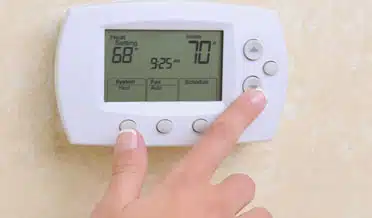
  2. Check the thermostat settings. Ensure that it is on HEAT or EM/AUX HEAT and that the temperature setting is at least 5 degrees lower than the temperature indicated on the thermostat face.
  3. If the settings are correct, turn the thermostat OFF temporarily and change the battery (or batteries). Observe to see whether the short cycling has ended.
  4. Check the vents and registers around the home. Make sure all are uncovered, since covered vents will reduce circulation.
  5. If short cycles continue, call your furnace/air conditioner technician for maintenance and repair.

Stop the Short Cycle Today

If your system is trapped in a persistent short cycle, ignoring the problem can lead to sky-high energy bills and premature equipment failure. These rapid bursts of activity put unnecessary strain on your HVAC components, often indicating a deeper issue like a faulty sensor or an improperly sized unit. Our professional technicians have the tools and experience to diagnose your system and restore perfectly balanced comfort to every room in your home. Call All Cool AC & Heating today at 281-238-9292 to schedule your AC maintenance appointment and get your system back on track.

What Are the Risks of Delaying the AC Repair Until Spring

Warning Signs: 3 Things That Lead Directly to Expensive AC Repair

The Real Cost of Delaying Your Annual AC Repair and Heating Tune-Up

South Texas usually experiences winters that are mild enough to give us bragging rights over our northern family and friends. However, cold winter temperatures are present enough to compel us to rely upon a good central heating system. Face it, we can choose between natural gas, electricity, or a heat pump system, but we are still depending on the same type of furnace that the rest of the country is using. These systems provide security, comfort, and a healthy indoor environment during extreme temperatures.

That means that we need to look after our very important building system to protect it from the harm that comes from ignoring maintenance. Heating and air conditioning systems require regular AC maintenance in the same way that cars need regular oil changes, tire rotations, and brake inspections.

The heating and air conditioning system is a complex network that combines mechanical, electrical, and chemical reactions to condition indoor air to counter outdoor environmental conditions. The complexity of the system makes regular maintenance important for several reasons.

Comprehensive Guide to HVAC Maintenance: Reduce Bills, Improve Air, Avoid AC Repair

  1. Dirt, dust, and pollen act to clog filters and condenser grids. They tend to coat components, which can affect indoor air quality or impede heat transfer. These contaminants need to be cleaned away.
  2. Moving parts and electrical connections inevitably result in wear. Some wear creates electrical resistance and requires components to use more energy than normal. Some wear causes corrosion and weakness in metal components. Either way, wear cannot be ignored for long. Neither can AC repair.
  3. AC Maintenance often catches stress and weaknesses that affect efficiency and function. Catching these problems early helps to save on energy bills, reduce further stress, and avoid costly and inconvenient breakdowns.
  4. Such care tends to extend the useful life of the system. The average heating and cooling system lasts about 15 to 20 years. Regular AC maintenance can extend that span by about 5 years.

The Role of Preventive Maintenance in Avoiding Major AC Repair

How does one go about properly caring for a heating and cooling system?

First, it is important to select a quality heating and air contractor to service and repair your home’s system. A technician will visit your home repeatedly, accessing several spaces inside and outside of the home. The same person needs to be trained to service and repair your brand, model, and size system. Make a good choice.

Find a good memory prompt. Seasonal changes work. Calendars, either physical or phone versions, will also work. Add prompts for quarterly air filter changes at the same time.

Get to know the essentials about your heating and air conditioning system.

  • Is your furnace powered by natural gas or electricity? Does it use heat pump technology?
  • What size is the furnace? What size is the air conditioner?
  • Are there auxiliary features of your system that you might not be aware of? There might be an immediate bonus to this knowledge!

This information will be very useful when the time comes to replace the system.

Regular maintenance will:

  • Improve indoor air quality.
  • Save significant money on the monthly energy bills.
  • Keep the system functioning as efficiently as possible.
  • Reduce the cost of AC repair by catching small problems before they become big problems.
  • Lengthen the serviceable life of the entire system.
  • Help you be prepared when the time comes for AC replacement.

Don’t Risk Your Comfort: When to Call for AC Repair Before Winter Ends

Ignoring your unit’s needs now can lead to a complete system failure when you need it most, resulting in complex and expensive AC repair later. Don’t risk a winter breakdown or compromise your indoor air quality by skipping essential maintenance. Protect your investment, reduce energy bills, and ensure peak performance year-round. Call All Cool AC & Heating today at 281-238-9292 to schedule your AC maintenance appointment and avoid that emergency AC repair!

What to Do About an AC Refrigerant Leaks

AC Refrigerant Leaks

Don’t Ignore an AC Refrigerant Leak: Your System Depends on It

As summer winds down and the cooler weather approaches, the trusty air conditioner continues to perform the tasks of cooling, cleaning, moving, and dehumidifying indoor air. However, if an air conditioner’s performance is declining, it should cause a homeowner to take notice and call for an AC maintenance technician to inspect the system. 

Air conditioning systems do not use fuel; they use a manufactured gas, designed to readily transfer heat, deemed a refrigerant or coolant gas. An air conditioner requires a static amount of refrigerant gas to cool the space properly. When the gas pressure decreases, the system tries to continue the cooling process without the proper refrigerant gas. When the air conditioner tries so very hard with inadequate pressure, it will cause crucial components to overheat and fail. This damage is usually very expensive, leading to the replacement of the entire air conditioner system.

AC Refrigerant Leaks? Here’s Why You Need a Pro

What causes a loss of refrigerant pressure? A weakness in the network of tubes that house and transport gas will occasionally result in a minute pinhole, but just enough for the gas to leak away. Since the gas is always under pressure, even a very small hole will release all of the refrigerant gas. Leaks often develop in the weakest portion of the system:

  • Joints between portions of tubing
  • The two major coils, where tubes are bent at 900 angles repeatedly

AC Refrigerant Leaks can also occur whenever the system’s tubing is damaged by contact or movement.

AC Refrigerant Leaks can be very difficult to locate and correct.

  • The leaks are usually very tiny holes, leaking minute amounts of gas. Gas will continue to leak even when the air conditioner is not running, since the gas remains under pressure at all times.
  • When the gas has completely leaked away, it is nearly impossible to locate the source of the leak. Often, additional refrigerant will need to be added to find the leak, knowing the gas will be leaking away.
  • The entire system will need to be checked, both indoor and outdoor components. Some of these components are difficult to reach.

Once the leak has been found and sealed, the whole system will be vacuumed completely to remove the air, various gases, and any other substance that made its way into the tube network. The vacuum will remain in place for a given time as a final pressure check; if a leak remains, the vacuum will be broken, allowing air into the system. The whole process will need to be repeated until all of the leaks have been sealed.

Refrigerants are not environmentally friendly, so it is important to find leaks and fix them quickly. Since they pose a threat to the ozone, the US Environmental Protection Agency is continuously seeking better, more friendly refrigerant gases. Over the last few decades, the EPA has changed the acceptable formulas for residential air conditioning systems.

  • Certain gases have been discontinued and have not been manufactured for several years. The gas for these systems is very scarce, may not be available, and the available gas for these systems is extremely expensive.
  • Certain gases have been discontinued and are no longer being manufactured, but a supply remains available. Refrigerant for these systems may be available, and the gas will be expensive.
  • All refrigerant gases are expensive and should not be allowed to escape into the environment if possible.

If your air conditioner is performing poorly, do not delay. Call us for service to test the refrigerant level. It could save your system from failure, save you money in repairs, and help preserve the environment.

Why an All Cool AC & Heating Professional is a Must for an AC Refrigerant Leak

Addressing an AC refrigerant leak quickly is crucial to prevent expensive damage to your system and protect the environment. Because these leaks are difficult to locate and fix, a professional All Cool AC & Heating technician is required to properly seal the leak and recharge the refrigerant. Don’t delay—call for service to save your system from failure and avoid costly repairs.

AC Repair Emergency: Your First Steps When the Cooling Stops

AC Repair Emergency

Facing an AC Repair Emergency? What to Do When Your Home Heats Up

Coming home or waking up to an unexpectedly hot house during the summer months can be quite alarming. After the initial shock and distress, it is time to take action. When a cooler head prevails, here are some steps to prepare for restoring air conditioning to your household during an AC repair emergency.

AC Repair Emergency: Quick Checks Before You Call for Help

Do some initial investigation.

  • Is the air conditioner receiving power? If not, first check the electrical service panel and find the circuit breaker marked “Air Conditioner.” If the breaker is tripped, turn it completely off and then on. Wait a few minutes. If a cooling cycle begins, be very observant. If the breaker continues to trip, a serious problem may have developed. If the breaker has not tripped, check the thermostat to make sure all the settings are correct. The indicator should be on COOL, and the temperature setting should be five degrees cooler than the indoor temperature.
  • Is the air conditioner running, but the air is hot and humid? First, check the air filter. A clogged air filter can restrict air flow through the air handler and interfere with the cooling function. Change the air filter and wait for results. If the cooling function returns, make sure to mark your calendar for a filter change every three months.
  • Is the air cool, but not cool enough to bring the home to the desired temperature setting? Are some areas cooler than others? Is the air cool, but the humidity high?
  • Next, look around and take notice of unusual sights, sounds, and smells. The presence of ice or a large water leak is a very important indication to your air conditioner technician. If the system is buzzing, screeching, or bumping, locate the noise, but do not touch anything. Flip the breaker to prevent further damage and wait for professional help. The air coming from the supply vents should be as fresh as the air in the home. If something smells bad or a little off, make a note of what you are observing.

Create a short list of your observations:

  • The condition of the air filter. If you change the filter, but the cooling function does not return, don’t discard the filter yet; the technician may want to observe the filter.
  • Write down the temperature setting and the actual temperature at the thermostat. The indoor temperature might change before the technician arrives.
  • Write down any steps you might have taken, for example, turning the system off, then rebooting like a computer. Record the results.
  • Write down all of the observations you made.

Now it is time to call the AC repair emergency professionals at All Cool AC and Heating. A wise homeowner will have developed a relationship with a local air conditioning company and perhaps have a favorite technician. Such contractor relationships help during times of emergency, and we are motivated to retain loyal customers. 

All Cool AC and Heating: Your Partner in Handling an AC Repair Emergency

When your HVAC system experiences an AC repair emergency, staying calm and performing these initial checks can help you understand the problem and provide crucial information to your technician. Remember, a trusted relationship with an experienced professional, like those at All Cool AC and Heating, ensures you’ll receive prompt, reliable service when you need it most. Don’t sweat it—we’re here to help restore your home’s comfort quickly and efficiently.

All Cool AC & Heating AC repair and maintenance professionals can assist with your Katy Texas AC repair emergency needs. Schedule your AC service or replacement appointment by calling All Cool AC & Heating at 281-238-9292 or contact us via email, and let our NATE-certified AC Repair Katy technicians put their experience to work for you.

5 Indications You Need AC Repair Katy

AC Repair Katy

Don’t Sweat It! Key Indicators Your Katy AC Need Repair

Some experiences cause us to stop and consider important life choices. Summers in Katy, Texas, when the temperature and the relative humidity are racing to get to 100 first, might just be one of those choice-questioning events. When you start asking the question, “Why here?”, remind yourself of these two bits of encouragement:

  1. The winters are nice.
  2. We have air conditioning!

Remember that air conditioners need maintenance, and occasionally they need repairs. What are some of the key indicators that an air conditioner needs repair?

5 Indications You Need AC Repair Katy

AC Repair Katy Indication 1: AC Not Working

Stating the obvious, when the air conditioner does not run at all, it is a clear sign that something is amiss. Before calling the technician, check the circuit breaker marked AC; if the circuit breaker is tripped, reset the breaker. If the air conditioner returns to normal, some anomaly may have been responsible. If the breaker trips again and will not stay on, a repair is needed.

Another cause for the air conditioner not working might be the thermostat. The thermostat can be found on an inside wall away from the open sunlight. There are several settings on the thermostat that can cause the air conditioner not to work:

  • A battery charge indicator. The thermostat runs on household batteries. If the batteries are low, the thermostat should indicate the problem, and the air conditioner will not work.
  • An ON/OFF function. This should be set to ON
  • A HEAT/COOL function. This should be set to COOL
  • A temperature setting. There are two temperatures indicated on the thermostat. One is the actual temperature indoors, and the other is the air conditioner setting. When the actual temperature rises above the air conditioner setting, it calls for cooling.

Make sure that all thermostat indicators are correct. Fix them before calling for a repair. If this does not solve the problem, call a technician.

AC Repair Katy Indication 2: Warm or Hot Air

The air blowing from the supply vent should be 15 to 20 degrees lower than the air in the home, usually between 55 and 60 degrees. When the air is noticeably warmer or just hot, it may indicate a serious problem. Before you call the technician for a repair, check the air filter. A fully clogged air filter restricts the air flowing across the evaporator coils, reducing the amount of cooling that can happen. Check the air filter and change it if necessary, before calling a technician for repairs.

AC Repair Katy Indication 3: High Relative Humidity

If the temperature is almost right, but the indoor humidity is as high as the outdoor humidity, it may indicate a repair needs to be made. The moisture is removed in the evaporator chamber, so check that air filter for this problem as well. The warm air inside the home must pass over the cool coil of tubes in the evaporator. If a dirty filter prevents or restricts the airflow, this could be the problem. If the filter is new, call a technician for a repair.

AC Repair Katy Indication 4: Sight, Sound, Smell

Air conditioners run in the background noise of a normal household. If you notice something different, do not ignore obvious facts.

  • If water suddenly flows from the air handler closet, it can be one of several problems, but it should result in a call for repair.
  • If the system suddenly begins to make unusual noises, loud buzzing, cranking, or screeching sounds, or loud banging noises, call a repair technician immediately.
  • The air blowing from the supply vents smells different from normal household odors; it usually indicates a problem that needs to be fixed.

AC Repair Katy Indication 5: High Electric Bills

It might take a while to attract attention, but if the electricity bill suddenly spikes, it may indicate a problem with the air conditioner. Do a little research to see if the use of electricity, measured in kWh, spikes year to year during the same month. This indicates a loss in efficiency and signals that a repair needs to be made.

Staying Cool When the Katy Heat Is On

Living in Katy, Texas, means embracing the heat, but it doesn’t mean you have to suffer through it indoors. Your air conditioner is your best friend during those long, hot summers, and recognizing the AC Repair Katy signs of trouble early can save you a lot of discomfort and expense. Whether it’s a complete shutdown, warm air, excessive humidity, strange noises or smells, or a surprisingly high electric bill, your AC often gives you clues when it needs attention.

Don’t ignore these indicators. A little proactive AC Repair Katy troubleshooting and knowing when to call our professional team can ensure your home remains a cool, comfortable sanctuary, even when the temperatures outside are soaring. So, keep an eye—and ear—on your AC, and enjoy your cool retreat!

All Cool AC & Heating AC Installation professionals can assist with your AC Repair Katy needs. Schedule your AC service or replacement appointment by calling All Cool AC & Heating at 281-238-9292 or contact us via email, and let our NATE-certified AC Repair Katy technicians put their experience to work for you.

Is Your AC Sick? 9 Signs You Need AC Repair

Is Your AC Sick? 9 Signs You Need AC Repair

Avoid the Heat: Know When to Call for AC Repair

Is your air conditioner functioning properly? How can you tell whether you need to repair the air conditioner? Here are some common signs that indicate repairs are in order.

1 High Humidity

When the relative humidity indoors matches the outdoor air, it indicates that the air conditioner is not removing moisture properly. Solid surfaces on furniture, flooring, and walls may feel sticky since the finishes are collecting moisture. Skin may also feel sticky, but it may not be from sweat.

2 High Temperature

Since air conditioning removes both humidity and heat from indoor spaces, whenever the indoor temperature rises, it usually indicates that the air conditioning function is failing. (If the temperature is very high, an old system may struggle to keep up without indicating failure.) Observe the thermostat setting and the actual temperature indicated to determine the depth of the problem.

3 Hot Spots

If the main spaces of the home are cool, but upper-story spaces or rooms far from the air handler cabinet are hotter than normal, it indicates the need for AC repair. This is especially true if these hot spots are a new development.

4 Low Airflow

If the amount of cool air flowing from the supply vents has declined substantially in the recent past, this indicates the need for AC repair. This low airflow may result in high humidity, high temperatures, 

and spaces that are not receiving sufficient cool air.

5 Strange Noises

Usually, air conditioner noises are limited to those associated with a blower motor and the gentle movement of air through supply vents. However, when the blower motor or other air conditioner components begin making loud, irritating noises, such as grinding, screeching, or banging noises, it indicates that the blower motor needs to be repaired. If electrical controls emit loud buzzing or rapid clicking noises, it indicates that AC repair is necessary.

6 Obnoxious Smells

The air conditioner should be moving the available air within the home. When the air exiting the supply vents smells unhealthy, it indicates that something is wrong and needs to be repaired. Healthy indoor air is essential to keep a family safe and healthy.

7 Water or Ice

Anytime ice build-up is observed on any part of the air conditioner components, whether indoors or outdoors, it is a serious problem that requires serious repair. Ice on the coils of the outdoor condenser unit is generally easily observed. However, ice build-up indoors may happen behind the walls of the air handler cabinet. What may be observed more quickly is the water leaking from the cabinet as the ice melts. Ice on the components or water leaking from any components (except through the drain lines) indicates the need for AC repair.

8 Long Cooling Cycles

If the air conditioner cooling cycles are exceptionally long or the air conditioner does not turn off, it indicates a serious problem. Of course, cooling cycles during periods of extreme heat might be normal. However, long cooling cycles during normal heat are problematic.

9 High Energy Bills

The price of energy fluctuates a bit, but if the electricity bill continually rises over the cooling season, it bears further investigation. Do a little research to determine whether the energy required for cooling (measured in kWhs) has increased during this month compared to last year or the year prior.

Components that are failing require more energy to accomplish the required tasks. Increased energy use without the addition of other devices generally indicates the need for AC repair.

Keep Cool and Save Money: Call All Cool for AC Repair

These indicators may happen individually, or several of these indicators may happen at once. If you observe these signs, call your AllCool AC and Heating AC repair technician and schedule an appointment.

All Cool AC & Heating HVAC professionals can assist with your HVAC repair and AC maintenance needs. Schedule your service appointment by calling All Cool AC & Heating at 281-238-9292 or contact us via email and let our NATE-certified indoor air quality technicians put their experience to work for you.

AC Repair: AC Tune Up Checklist

AC Repair: AC Tune Up Checklist

AC Repair and AC Tune Ups

An air conditioner is such a part of life in the deep South that we take it for granted and know very little about this important building system. The system surrounds us and contributes to the background noise of life. Knowing a little about the heating, ventilation, and AC Repair can be very useful.

Three visible components deserve attention.

  • Various vents can be found in every room, transporting air from the spaces to the central cabinet and back again.
  • A central HVAC cabinet may be located in a closet, attic, garage, or basement.
  • The outdoor portion of the system is generally called the condenser unit, although it completes several functions.

Both the central cabinet and condenser can complete both heating and cooling functions.

AC Repair: Ductwork Details

Sheet metal or plastic ducts circulate pressurized air throughout the home. The ducts should be sealed and insulated for the best results.

  • The blower motor pushes air from the central cabinet to the various spaces of the home. This air may be heated, cooled, or just circulating; it should be both fresh and drier than outdoor summer air.
  • The same blower motor is drawing air from various portions of the home. This ensures that air is circulating, mixing warm and cool air. It also keeps the air pressure balanced.

AC Repair: The Central Cabinet

This structure is often a tall, square assembly, with various important modules.

  • The blower motor spins a fan, pushing air out and pulling air into the central chamber. This chamber is where the air is cooled or heated, depending on the season. During the cooling season, the air is also dehumidified in this same chamber.
  • The air filter cleans the air as it enters the cabinet. Be aware! Even simple filters are very efficient, so make sure to change the filter often—at least every three months.
  • The evaporator coil receives the refrigerant when the pressure is released, dropping the temperature to about 40 degrees. This cools the air and causes moisture to condense on the coil and drip away.
  • The heater is also housed in the central cabinet. The furnace may be natural gas or electric-powered. The blower motor is responsible for moving the warmed air throughout the home during the heating season.

AC Repair: Condenser Unit

This portion of the HVAC system is also complex and full of function.

  • The compressor motor pressurizes refrigerant gas to about 400 psi. This motor is the powerhouse of the whole system and must be maintained properly.
  • The expansion valve is also located here. It releases the gas upon demand. When a gas is pressurized and then suddenly released, the result is immediate cooling of the gas—the source of air conditioning. The evaporator coil is the recipient of the cooled refrigerant gas.
  • The condenser cabinet is a hollow network of tubes and fins designed to disperse heat. The cool refrigerant gas collects heat from indoors and brings it outdoors. This gas must be cooled before it reenters the compressor motor to avoid overheating it.
  • The condenser unit of heat pumps reverses this process and serves to heat the home during the winter. The refrigerant collects heat from the winter air and moves it inside.

AC Repair: The Control Mechanism

The ON/OFF switch is called the thermostat. It is mounted on an interior wall and measures the changes in temperature in the immediate vicinity. When the temperature lowers or rises past the setting, it calls for a heating or cooling cycle until the desired temperature is reached again.

AC Repair Experts are Just a Phone Call Away

Schedule your Katy AC Repair and AC Tune Ups consultation by calling All Cool AC & Heating at 281-238-9292 or contact us via email and let our NATE-certified Katy AC Installation technicians put their experience to work for you.

6 Tips for Summertime to Reduce AC Repair

Katy AC Repair

Katy AC Repair Tips to Reduce HVAC Repair Costs

As the summer heat intensifies, south Texans depend on air conditioning for every aspect of life: transportation, work, and being at home. We tend to choose when and how long we expose ourselves to the heat and humidity of the great outdoors.

For this reason, it is important to care for the entire home to enhance the safety, health, and comfort air conditioning brings. The following Katy AC repair steps can help cool a home with better results and efficiency.

Katy AC Repair Tip 1: Acknowledge Solar Power

Many homes are built to accentuate natural lighting, brightening certain spaces for aesthetic purposes. However, this natural lighting can increase solar gain and make a home warmer than desired; the light energy entering a home can increase the indoor temperature by as much as 10 degrees on very sunny days.

Blocking the light on the south side of the house from about 9 to 5 can keep a home cooler and require fewer cooling cycles per hour. Early morning and late afternoon light is less intense and should be more enjoyable.

Katy AC Repair Tip 2: Understand Radiant Heat

Heat also travels through solid objects; when the exterior of the home becomes hot, the heat travels through the building material and enters the home. The purpose of insulation is to create a barrier to radiant heat.

A poorly insulated home allows more heat to pass through walls and ceilings than is comfortable. After construction, usually, the only accessible space for insulation is the attic, so make sure your attic is adequately insulated.

Katy AC Repair Tip 3: Recognize the Benefits of Maintenance

Air conditioning systems are quite remarkable. They cool a home, remove humidity, clean the air, and keep the moving air fresh. The whole house can be cooled to a precise temperature setting and maintained day and night, as desired. However, this precise mechanical system must be properly maintained to ensure it functions properly and efficiently.

Without regular maintenance, performance suffers, cooling costs soar, and the components (or the whole system) reach a premature end of useful life. Manufacturers and HVAC technicians recommend scheduling annual preventative maintenance and quarterly air filter replacements.

Katy AC Repair Tip 4: Schedule Temperature Changes

Many thermostats are programmable, but few homeowners take the time to program temperature changes to their advantage. Is the house empty for extended periods? Do family sleep patterns coincide?

These are two lengthy periods in which the temperature setting could be raised by 5 to 8 degrees without affecting comfort. It would, however, affect energy efficiency and cost to the benefit of the family budget. Take a few minutes and read the instruction manual for the thermostat.

Katy AC Repair Tip 5: Inspect the Vents

Vents are strategically placed throughout the home to ensure the indoor air is thoroughly mixed; supply vents are placed low, and return air vents are placed high. During normal household activities, vents can be covered or blocked by drapes, clothing, or furniture. Take time to notice vents regularly to ensure they remain clear for adequate air movement.

Katy AC Repair Tip 6: Use Ceiling Fans Effectively

Ceiling fans generally assist the air conditioning system, helping to mix the air for improved cleaning and cooling. Static air can develop thermal layers, with warm air high and cool air low. A ceiling fan set to turn counterclockwise will pull the air up and push air out to the sides of the space, mixing the air and moving it toward return air vents.

Call the Katy AC Repair Experts

Routine maintenance and preventative tips like we have outlined can help you reduce Katy AC repair costs this summer. Schedule your Katy AC repair consultation by calling All Cool AC & Heating at 281-238-9292 or contact us via email and let our NATE-certified Katy AC repair technicians put their experience to work for you.


Katy AC Repair

Katy AC Repair

Katy AC Repair or AC Replacement, Which is Right for You?

Air conditioning became common in the 1950s and by 1960, most new homes were built with central AC. With nearly 70 years of available data concerning air conditioner use, the information concerning longevity is pretty accurate. That is, the average lifespan of air conditioners ranges between 15 and 20 years, while regular preventative maintenance and timely AC repair can add years of service—five to ten extra years.

This information might impact your present situation if your AC system is approaching its teenage years. During this time, you can expect repair bills to mount. It can bring up a dilemma—keep repairing it or replace it. Here are some vital pieces of information to help you make this determination.

The Intricacies of Katy AC Repair

It will also seem that repairs are cheaper than replacement; after all, the replacement cost can be quite expensive. However, there are further cost considerations that should put the replacement cost into a balanced perspective.

  • Research repair invoices for your system and pay attention to the accumulation of bills. One repair bill might not be significant, but a high total or an increase in repair costs might give a different story.
  • This research might also reveal the necessity of repairing the same part repeatedly. When this happens, it often indicates a weakness in the system that is not being addressed. That means further repairs should be expected.
  • When both factors are combined, it signals a rising cost that you should be aware of.
  • As the system ages, larger components are threatened by wear and tear. Large components = large cost. It is at this time that repair costs and replacement costs must be closely compared and considered. Replacing expensive parts on a failing system might not be a wise decision.

“Staying the course” might make sense . . . until it doesn’t.

The Reality of Age

As your system ages, other realities affect the bottom line and impact financial decisions.

  • Older systems, with weakened components, will still try very hard to meet the temperature setting called upon with the thermostat. Cooling with weaker parts requires more energy, and more energy costs more money, and this might become apparent. If you are unsure, request the energy bill from the same month for the last two years, and compare the amount of energy for each month. The energy amount is measured in kWh.
  • Older systems may also suffer in performance. It might be evident during a period of extreme heat; a heat wave might leave occupants uncomfortably warm. An older system might also fail to remove adequate humidity, leaving everyone and everything feeling sticky and moist.
  • An older system gives you a glimpse of the future and allows you to plan for a future replacement. Saving money or adjusting the budget will help you prepare for the large purchase that is sure to come. It is a better plan than wishful thinking.

Preparation should include scheduling the eventual replacement and avoiding times of serious schedule pressure by Katy AC Repair technicians.

Contact Your Katy AC Repair Experts Today

Schedule your Katy AC Repair consultation by calling All Cool AC & Heating at 281-238-9292 or contact us via email and let our NATE-certified Katy AC Repair technicians put their experience to work for you.