Energy Efficient Heating Tips for Winter

Energy Efficient Heating

Energy Efficient Heating Tips for Homeowners

When the utility bill arrives, there is often a quick twinge of panic and a desire to find Energy Efficient Heating methods to result in energy lower costs. Oh, and if we could find some Energy Efficient Heating hacks that cost absolutely nothing, that would be even better! Well, hang on, because we have a few real Energy Efficient Heating tips. You might not be able to use them all, but see how many will help.

Energy Efficient Heating: Solar Energy Hacks. The sun delivers 10,000 times more energy to the earth than the amount of energy that people use. If you stand in front of a window on a cold, sunny day and you will appreciate passive solar gain. Capturing a portion of the sun’s energy inside your home will save you money.

  • Winter sun is low in the sky during the winter and high in the sky in the summer. A low sun pours more sunlight into your home on winter days.
  • The sun allowed inside warms the flooring, the furniture, and the walls. This energy radiates into the air in your home, raising the temperature by as much as 150 on a sunny day.
  • Windows are the key to solar gain. New double-paned windows trap heat in the space between glass panes and that costs nothing. Open the drapes and blinds during the day on South-facing windows between 9 am and 3 pm on sunny days. Close the drapes and blinds after the sun sets to reduce the amount of heat escaping into the cold, dark night.

Energy Efficient Heating: Fan Hacks. To maximize solar gain, move the free solar heat with ceiling fans. The wintertime setting for ceiling fans turns the fan in a clockwise rotation; this pulls air up and pushes the warm air toward the outside of the room, and potentially into other areas of the house. Set the fan at the lowest speed and move this air around. Also, use kitchen and bathroom exhaust fans sparingly. The air being pulled outside is warm, air—the kind of air you are trying to keep indoors.

Energy Efficient Heating: Thermostat Hacks. The thermostat is a switch that turns the heat on or off based on a pre-determined temperature setting. All but the oldest thermostats are programmable; that is, you can program the switch to change the temperature on a timed schedule. How does that help?

  • Be slow to switch the heat (or AC) on at the season change. Develop a little tolerance for a cooler temperature setting. Set the temperature at the lowest comfortable setting for your family.
  • The EPA has demonstrated that if you lower your thermostat setting by 7 to 10 degrees for a minimum of 8 hours, you will save 10% on your heating bill.1  That does not cost a thing and you enter the scheduled changes only one time.
  • There are two ideal times to program a reduction in temperature for 8 hours: overnight, while everyone is sleeping, and during the day, while the whole family is away from home. Try a few different schedules to see which works for your family.

Energy Efficient Heating: Appliance Hacks. Some of your household appliances create significant heat for cleaning and cooking. Wash dishes and clothes later in the day to fully appreciate the heat they generate. Exhaust the hot, moist air produced by showers during the summer, but retain it in the winter as much as possible. Cook and bake to your heart’s content on cold days; exhaust only the most disagreeable cooking odors.

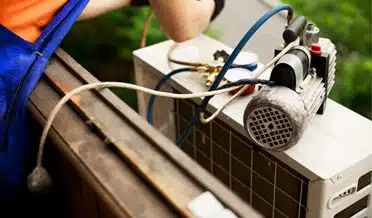
Energy Efficient Heating: Maintenance Hacks. Make sure to follow your manufacturer’s user guides concerning regularly scheduled preventative maintenance visits; annual maintenance is usually the guideline. Be sure to change your air filter regularly, at least every three months. These steps keep your HVAC system functioning efficiently and this saves you money.

Have questions about Energy Efficient Heating? We can help!

Schedule your free Energy Efficient Heating by calling AllCool AC & Heating at 281-238-9292 or contact us via email.

Energy Efficient Heating

1 https://www.energy.gov/energysaver/programmable-thermostats#:~:text=Thermostat%20Operation&text=You%20can%20easily%20save%20energy,asleep%20or%20away%20from%20home
Furnace Maintenance: 6 Tips to Energy Savings

Furnace Maintenance

Energy Efficiency Requires Furnace Maintenance

Whoa! Energy costs are way up and paying your heating bill this winter is tough, with a capital T! If only there were some low-cost or no-cost options to lower that nagging utility bill. Here are a few things to try:

  1. Make sure you change your air filter regularly. The air filter constantly cleans airborne particles from your home’s indoor air. Air filters tend to be very effective, so the dust builds up rather quickly. However, once the filter is clogged, it restricts airflow. That seems like a small thing, but heating and air conditioning depends upon good airflow.
  2. Speaking of good airflow, check all of the supply vents and return air registers to make sure they are not covered. Occasionally a drape or piece of furniture gets moved and covers the opening.
  3. If you have a fireplace, make sure the damper is closed when not in use. Remember, heat rises and when it is open heat is escaping from your home.
  4. Learn to appreciate solar gain and begin a habit of opening and closing window treatments to heat your home. Opening the drapes and blinds on the south side of your home during sunny days can warm your home by 100 Be sure to close them after the sun goes down since they can prevent heat loss.
  5. Use the existing ceiling fans in your home to enhance your comfort. The wintertime setting for ceiling fans is clockwise; this draws air up and pushes the warm air trapped in the ceiling out and down. For your comfort, keep the fan on the lowest setting.
  6. Pay attention to your thermostat and learn how to program it for energy/cash savings. Newer thermostats are either programmable or have smart capabilities, with a cell phone app to customize your programming. Find agreeable times with your family members to lower the thermostat for several hours. Ideal times for lowering the temp include while everyone is asleep or away at work or school. Reducing the temperature by 6 or 80 for at least eight hours per day will make a discernable dent in your utility bill.

Don’t forget that you are also heating water; check the temperature setting on your hot water heater to make sure it is not set too high.

  • Whenever possible, take the opportunity to add insulation, caulk, and weather stripping to prevent heat loss.
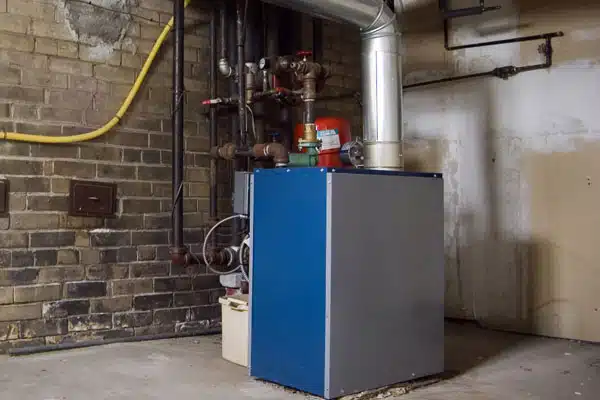
  • Schedule a routine preventative Furnace Maintenance visit with an HVAC professional annually. Keeping the system clean and in proper repair will ensure your furnace is functioning at peak efficiency. This does reduce costs as much as possible.

Have questions about Furnace Maintenance? We can help!

Schedule your free Furnace Maintenance consultation by calling AllCool AC & Heating at 281-238-9292 or contact us via email.


3 Steps to Better Indoor Air Quality

3 Steps to Better Indoor Air Quality

One of the changes that resulted from the Covid-19 pandemic is a major interest in improving indoor air quality. If people were spending 90% of their time indoors, everyone would benefit from improved indoor air quality. If we face an unseen, airborne virus, how can we remove the virus to avoid the disease it causes? The sale of air quality monitoring and air cleaning technology has grown exponentially, up 800% since 2015.

Indoor Pollutant Sources. The building material of each home often contributes to indoor air quality. Older homes might contain harmful substances, such as asbestos or lead. Generally, these products are inert and do not become airborne unless disturbed during renovation. Newly manufactured items, including carpet and paint, release volatile organic compounds (VOCs), usually in the form of a gas.

Human activity also contributes pollutants to indoor air; just breathing adds CO2. The skin and hair of family members and pets add dust and dander. Cooking, smoking, cleaning, and lighting candles add gases to the indoor mixture of air. If you cook, heat water, and heat the air with natural gas or propane, the combustion contributes CO to the pollutant level.

Outdoor Pollutant Sources. The airborne particles in outdoor air are much more dilute since they move around a lot. The level of pollutants varies according to location and season. Organic particles include pollen, mold and mildew spores, and mites—microscopic insects that feed on organic dust particles. Pests, including both rodent and insect varieties, can contribute to indoor air pollution.

Let’s be clear; every home will contain some of these pollutants, but no home will contain all of these pollutants. It is important to first determine which pollutant category(categories) is the most troublesome in your living space.

Steps to Cleaner Indoor Air

1 Monitor Indoor Air Quality.

Do you have an indoor air quality (IAQ) problem? What type of pollutants contributes the most? Monitoring the air quality is the only way to define any IAQ issues. Most indoor spaces already utilize some IAQ monitors; smoke and CO detectors are examples. Examples of further monitoring devices include:

  • Single Pollutant Monitors. If a space is known or suspected of high concentrations of a particular pollutant, find a sensor that measures the known particulate and monitors its presence continuously.
  • Multi-pollutant Monitors. These sensors measure the concentration of several pollutants at once. They can be set to monitor particulates by size—10 microns to 2.5 microns, as well as monitor the presence of gases—VOCs or formaldehyde for example.
  • Monitors are available for both commercial and residential spaces.

2 Source Identification.

When a pollutant is identified, the next step is to find the source of the pollutant; does it originate from an outdoor or an indoor source? There might be a hidden problem that monitoring exposes.

3 Source control.

Identifying the pollutant type leads to finding steps to reduce or eliminate the source of the pollutant. If particulate size suggests a problem with pollen, possible sources include open windows, a leaky building envelope, or shoes/coats that carry pollen into a space.

IAQ Solutions. The type and concentration of pollutant determine the necessary step(s) needed to mitigate the situation.

  • Air Filters. Filters remove airborne particles, but cannot remove gaseous pollutants. Filters are semi-permeable barriers, with small holes that let air through but capture other items. They are rated by the size of the hole by a MERV rating—the larger the MERV number the smaller the hole. The best air filters are high-efficiency particulate air (HEPA) filters, that capture 99% of solid airborne particles.

Consult with your HVAC technician to determine the appropriate filter for your system. Most residential HVAC systems cannot utilize HEPA filters. Filters will need to be changed periodically, often every three months.

  • Ultraviolet Light(UV). When you are in direct sunlight it is in your best interest to apply sunblock to your skin. The UV light from the sun damages the cell walls of your exposed skin, a condition we call sunburn. The same principle is used by adding UV light to the HVAC ductwork; the light damages the cell walls of bacteria, viruses, pollen, mold spores, and dust mites. The inert cells are readily captured by the air filter or collected during vacuuming/dusting.
  • Air Purifiers. Both small, portable, and large-scale air purifiers are available for any size of space. Air purifiers draw indoor air through a multi-phase filtration system, including an activated charcoal filter. Charcoal contains small pockets that attract, collect, and keep gaseous odors and pollutants. Often, these filters can be manually cleaned, so maintenance is required. Neither air filters nor UV light can remove gases from the air.
  • Bipolar Ionization (BPI). BPI is installed inside the ductwork of an HVAC system. Ions are atoms or molecules that have at least one too many or one too few electrons compared to a more elemental form of the same substance. PBI creates both positive and negative oxygen molecules and releases them into an indoor space. The benefit is these ions readily attach to airborne particles and change their chemical formulas. Ions attach to VOCs and formaldehyde, creating inert organic compounds that become dust. They attach to organic material, such as bacteria and pollen, damaging cell walls. They also are attracted to other oxygen molecules, exchanging electrons and forming stable oxygen molecules.

Continuous follow-up air quality monitoring will help you keep apprised of the IAQ so that solution methods can be re-implemented in a timely manner.

Have questions about Indoor Air Quality? We can help!

Schedule your free Indoor Air Quality consultation by calling AllCool AC & Heating at 281-238-9292 or contact us via email.

3 Steps to Better Indoor Air Quality

5 Signs You Need to Make an AC Repair Appointment Today

Warning Signs You Need AC Repair 

Warning Signs You Need AC Repair

Well . . . your older air conditioner made it through another summer. It ran well, but you are a little concerned; it has been around for a while and last summer it required a minor AC Repair. The fall is a good time to replace it but is considering taking a chance for one more year. What should you know before making that decision? Here are a few things to consider:

  1. Old Age. It really is a key consideration. Keeping it clean and well-maintained will prolong its usefulness, but eventually, large components will fail. Efficiency will drop. Economically, it will make sense to replace your air conditioner. The age range for AC components is between 15 to 20, more if maintained. Research the installation year and it can help you determine the urgency of replacement.
  2. Duplicate Repairs. Another key consideration is needing to replace the same part or similar part multiple times. When electrical control switches, sensors, and capacitors weaken and fail, this puts stress on larger motors. The stress will accumulate and lead to failure in these larger parts.
  3. Efficiency Loss. You might notice this when the AC takes longer to cool your home than normal or struggles to cool during heat waves. Or the system might blow hot air. You might also notice a loss of efficiency when you open your utility bill each month—more than the rise attributed to inflation.

Before you assume the worse, have your AC unit checked; this might indicate the loss of coolant gas. Sealing the coolant line and recharging the system is an easy fix.

  1. Efficiency Loss. Another indication of efficiency loss is higher humidity in your home. Surfaces might feel sticky, or the air may feel heavy and wet. High humidity might promote the growth of mold or mildew, so the air may smell musty. The coolant gas is also responsible for removing humidity, so let a technician check your system. Again, this is an easy fix.

If the coolant pressure is fine with a marked loss of efficiency, it may indicate deeper problems for AC Repair.

  1. Unusual Noise. The noise your AC makes should be minimal; you may hear the blower motor and the whoosh of air near the vents. Screeching, squealing, or rattling noises are not normal. When the normally slight noise becomes loud or unusual, this needs to be addressed. Noise can come from moving parts, such as the blower motor, or it can come from the stress on stationary parts.

If your aging air conditioner is experiencing a combination of these indicators, it is sending early warning signs of failure or AC Repair. By listening to your system, you will be able to plan accordingly. The early warning gives you time to shop around to find a brand and contractor. It gives you time to schedule the installation.

Most of all, you avoid replacing your air conditioner under the duress of an emergency; that emergency will most likely happen during the hottest part of the summer or the coolest part of the winter when your aging system is under significant stress.

Have questions about AC Repairs? We can help!

Schedule your free AC Repair consultation by calling AllCool AC & Heating at 281-238-9292 or contact us via email.

AC Maintenance Katy Tx: The Importance of HVAC Maintenance

AC Maintenance Katy Tx

AC Maintenance Katy Tx: The Importance of HVAC Maintenance

There are two awesome things about autumn in Houston: football and cooler fall weather. In the spring, everyone seems to long for the summer heat and all of the outdoor activities we can only do in the summer. But after a few months of intense heat, the heat seems to lose its appeal–the heat of summer can be very long. By this time of the year, we look forward to cooler weather, when air conditioning is not necessary.

Actually, the fall is a perfect time to have your residential air conditioner serviced. During the heat of the summer, air conditioning technicians are extremely busy handling repairs and replacements. As the weather cools, the pressure is off of both your AC system and the technicians who complete preventative maintenance. Scheduling an annual maintenance visit yields quite an advantage for your home.

Standard Preventative Maintenance for AC Maintenance Katy Tx

Our air conditioning technicians have the training and experience necessary to maintain modern air conditioning systems. Our trained professionals will locate components that require attention with equipment designed to monitor and measure performance. Our maintenance program includes:

  • Clean the dust from the condenser coil outdoors and check the refrigerant gas
  • Clean the evaporator coil and make sure the drain line is clear
  • Clean the blower fins as needed
  • Check and calibrate electrical component parts in the cabinet
  • Inspect and calibrate the thermostat as needed
  • Check the supply vents and return air registers, making sure they are uncovered
  • Measure the cooling performance to make sure it functions properly

Preventative maintenance ensures your system will be ready for the cooling season next spring

Why Perform AC Maintenance Katy Tx?

As an investment.

For most Americans, a home purchase is the largest investment they will make. Your air conditioning system is vital to making your home healthy and comfortable. You change the oil in your car. Schedule maintenance on your AC unit.

Better performance.

Cleaning and caring for your air conditioner will ensure it functions properly; your system is designed to both cool the air and remove moisture.

Energy Savings for AC Maintenance Katy Tx

Making sure your air conditioner is functioning well makes sure it runs efficiently, saving energy with each cooling cycle. Of course, saving energy also saves money on each utility bill; saving energy is also healthy for the environment. Way to go!

Reducing repairs and prolonging the usefulness

Keeping existing component parts is usually preferred to paying to replace parts prematurely. By inspecting and maintaining these expensive parts regularly, you extend usefulness—sometimes by 5 or 10 years. Extending the life of your air conditioner puts off replacement. When the time comes to replace your air conditioner, you can do it knowing you did everything you could to spend money wisely.

Peace of mind

When you maintain your air conditioner in the fall you have the satisfaction of knowing your system is primed and ready for the next cooling season. In late spring, you can slide the thermostat control to cool with confidence that your system is ready for the heat of the coming summer.

Have questions about AC Maintenance Katy Tx? We can help!

Schedule your free AC Maintenance Katy Tx consultation by calling AllCool AC & Heating at 281-238-9292 or contact us via email.


New AC Installation FAQs

New AC Installation: What You Need to Know Before You Buy

New AC Installation: What You Need to Know Before You Buy

If you find yourself needing a new New AC Installation, a.k.a., your HVAC system, you have some exciting choices about features that will impact comfort and health for many years to come. Most well-maintained HVAC systems last 20-25 years, so expect to keep this system around for a while. In order to prepare you for this important decision, here is some basic information to help you.

New AC Installation: Two Basic Systems

While it has been around for decades internationally, the mini-split ductless air conditioner system is gaining traction over central heating/air systems in the U.S. Here is a short description of the two types of systems.

  • The biggest difference between the two systems is . . . ducts. Ductless systems provide both heating and cooling using very similar technology, but the delivery system is via a wall-mounted unit instead of floor vents. These wall units are quieter than a central air system. Each room has a separate thermostat, allowing for zone heating and cooling. These systems are very energy efficient and can save money each month. They are especially useful when adding rooms or renovating older homes without existing ducts. Since mini-split systems use heat pump technology, they struggle to produce heat when the temperature drops below 320
  • Traditional central heat/air systems are good, efficient systems and can be found in most homes in the U.S. Typical central systems will have component parts indoors and outdoors. The blower motors on central systems move a lot of air—the entire volume of your home circulates every few minutes. While the air is moving, it filters well. One system can cover large areas, but creating zones is usually not possible. Central heat will use heat pump technology, just like the mini-split system. However, an auxiliary heat source, either electric or natural gas, handles low temperatures.

New AC Installation Proper Sizing and Ratings

Both mini-split and central systems are sized using the same method. A technician will complete a load calculation to determine size; square footage, insulation type, window and door openings, and other factors that are entered into an algorithm. The heating need is measured in British Thermal Units (BTUs) and air conditioning is measured in tonnage. Larger numbers are not better or worse, they just measure the need. An important fact: for a number of reasons your new system might not match the size of your old system.

Ratings measure the efficiency of heating and cooling functions. The basic information on New AC Installation ratings is:

  • Air conditioner efficiency is measured in SEER or Seasonal Energy Efficiency Ratio. The minimum SEER rating is 13 and the (current) maximum rating is 22: in order to qualify as EPA Energy Star, the SEER rating must be 14.5. Energy efficiency will cost more upfront and be repaid for lower bills over time.
  • The amount of energy lost by electric furnaces is negligible, so they are considered 100% efficient. Gas furnaces receive an Annual Fuel Utilization Efficiency rating that measures the percentage of fuel energy successfully captured for indoor heat. Watch for AFUE ratings between 90 and 98(%). Again, energy efficiency costs more with the purchase but is recouped with lower utility bills.

Features to Explore

The basic technology for heating and air conditioning has been around since the 1960s, but engineers keep improving system components. Some improvements to watch for include:

  • Blower motor technology. Mini-split systems have very small quiet blower motors and room occupants might not notice the noise. Central systems have larger motors and in the past, the noise was very noticeable. New technology includes variable speeds and whisper-quiet technology.
  • Air Filters. Mini-split systems may come with washable air filters and save money on the cost of replacing filters over the years. Watch for systems with better air filtration: look for a MERV rating on available filters—the higher the number the better.
  • UV Lights. Ultraviolet light will neutralize organic airborne particles, such as pollen, dust mites, mold spores, bacteria, and viruses. This is a definite plus.
  • New thermostats allow you to schedule regular temperature changes. This adds comfort and helps save on the energy bill. Programmable thermostats allow you to set the schedule and forget it. Smart thermostats include a phone app that allows you to make changes on the move.

Are you researching a New AC Installation? We can help!

Schedule your free New AC Installation consultation by calling AllCool AC & Heating at 281-238-9292 or contact us via email.

New AC Installation: What You Need to Know Before You Buy

6 Tips to Keep Your HVAC Compressor from Failing

6 Tips to Keep Your HVAC Compressor from Failing

HVAC Compressor Maintenance Tips

As a homeowner, you understand the importance of your HVAC Compressor and AC system: it heats and cools, cleans the air, and removes humidity on hot summer days. You often hear that maintenance saves you money, avoids repairs, and keeps the whole system running longer.  All that is true: maintaining the whole system is more convenient and less expensive than repairs.

This article will focus on caring for the compressor—the workhorse of your system. HVAC Compressor failure is a catastrophic loss; compressor replacement often leads to AC replacement. Let’s take a look at what makes it critical and how to take care of it.

With heat pump technology, the compressor is used for both heating and cooling. The technology is based on gas science; when a gas is compressed, it heats and when the pressure is released, the gas cools. This is done at a predictable rate, so engineers make use of this science to accomplish a desired task.

As the name implies, the compressor compresses the gas and pushes it into the evaporator coil, where the gas pressure is released.

The blower motor is continuously moving air from your home through the evaporator chamber. Inside the evaporator chamber, this cold refrigerant gas completes three tasks simultaneously; cools the air in the evaporator chamber, removes humidity when the moisture condenses on the coil and absorbs heat from your home.

Now the hot gas moves outdoors to the condenser unit and the heat is released. During the winter, the same system works in reverse order; the gas picks up heat from outdoors and brings it inside.

HVAC Compressors generally fail when other components are under increased stress. Maintaining your compressor requires a few basic steps that you can accomplish and further steps that require a technician with professional equipment and training.

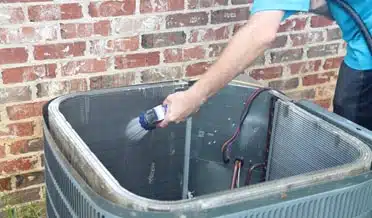
  1. Basic cleaning. Contaminants are the nemesis of any mechanical system. It is true of your car. It is true of your lawnmower. It is true of your computer. Your HVAC system is no different. Start by making sure to change your air filter on a regular schedule—every three months is enough for most settings. Use a garden hose and gently wash grime and dirt out of the condenser coil—the outdoor component. Ideally, you should clean your ductwork every three to five years.
  2. Professional Service. Develop a relationship with a local HVAC contractor and schedule an annual PM visit for your system. A qualified technician will ascertain the condition of your compressor and other components. Professional equipment is required to measure gas pressure and recharge the system if pressure is low.
  3. Recharging the system. A loss of cooling capacity (or heating capacity in the winter) might be an indication of low gas pressure. The refrigerant gas is kept in a closed system of copper or aluminum tubes, so low pressure indicates a leak. Before the technician can recharge the system, the leak will need to be repaired. Since some refrigerant gases pose a danger to the environment, 33all refrigerant gases are highly regulated. A professional license is required to handle these gases.
  4. Clean the evaporator coils. Dirty coils can lead to a loss of cooling capacity, gaining access to the coils requires accessing the central air unit. While the cabinet is open, the technician will also clean the evaporator drain pan and make sure the drain line is open.
  5. Inspect electrical controls, sensors, and wiring. Even a small amount of dust can interfere with the sensitive control mechanisms. This investigation can detect electrical components that are under stress and subject to imminent failure.
  6. Repair the compressor as needed. The lubrication for the compressor is in a closed system and when the system is compromised it will need to be repaired and lubed again. Your technician will have the correct parts available and the necessary skill to make repairs.

The best way to take care of your HVAC Compressor is to maintain the whole system. A preventative maintenance plan can keep your HVAC Compressor, and therefore, your entire HVAC system viable for years to come.

6 Tips to Keep Your HVAC Compressor from Failing

Let us help with your HVAC Compressor Repair

Schedule your AC Maintenance assessment by calling AllCool AC & Heating at 281-238-9292 or contact us via email.


5 Essential AC Maintenance Tips

5 Essential AC Maintenance Tips

AC Maintenance Tips for Homeowners

Heat and humidity seem to be our constant companions during the summer months. Your air conditioner is a critical key to keeping your family comfortable during the long Texas cooling system. We often share tips with homeowners for maintaining air conditioners, but it may be good to know there are more steps you can take to help keep your house cool beyond your air conditioner. While these steps cannot take the place of AC, they certainly can help. Let’s take a look at some of these AC Maintenance steps.

“Use” Sunlight Wisely

Everyone loves natural light flowing into their home. However, summertime sunlight equates to an increase in indoor temperature. Closing blinds and/or drapes during the day will reduce sunlight and keep your home cooler during the hottest part of the day. Tree shade and directional facing will be different for each home; know how to keep your home cooler.

Plan Meals

Oven-cooked meals might be perfect during cooler months, but they put stress on your AC and warm your kitchen significantly. There are several options available to keep your kitchen cooler.

  • Set one day aside to cool meals for the week. This reduces the number of hot days in the kitchen
  • Plan to cook outdoors.
  • Use energy-saving appliances, such as air fryers and electric pressure cookers

Schedule Cleaning

Clothes dryers and dishwashers contribute a little bit of heat and humidity to your home and impact comfort. If you plan to run these devices in the evening hours, during the coolest part of the day, they should have a minimal impact on your comfort and help with energy conservation.

Redirect Your Ceiling Fans

Ceiling fans will not lower the air temperature but moving air speeds evaporation and therefore the air feels cooler. On the core of each ceiling fan is a small toggle switch that changes the direction of the fan. When the fan turns in the counterclockwise direction, it pushes air down and creates a cool breeze. Make sure each fan is turning counterclockwise during the summer to keep your home at peak comfort.

Address Problem Areas

If one or more rooms are consistently warmer than the rest of the house, don’t ignore the fact and research the root cause. Inspect every surface:

  • Check the attic for poor insulation
  • Check the windows and doors for leaks
  • Check the ducts to make sure they are intact and not leaking.

Of course, taking care of your air conditioner goes a long way toward keeping your home comfortable. Every mechanical system needs maintenance, and your air conditioner is no different. Cleaning the condenser coil, and ducts, and changing air filters are a few maintenance tasks that help your AC run efficiently. A regular preventative AC Maintenance inspection is recommended by your AC manufacturer.

Give All Cool AC a call to schedule an annual preventative AC maintenance visit with an HVAC professional.

Let us help with your AC Maintenance

Schedule your AC Maintenance assessment by calling AllCool AC & Heating at 281-238-9292 or contact us via email.

5 Essential AC Maintenance Tips

6 Most Common Residential AC Repair Issues

6 Most Common Residential AC Repair Issues

Residential AC Repair

Walking out of the summer heat into an air-conditioned space is a special feeling; it might elicit a deep sigh while crossing the threshold. When you step into that same space, expecting comfort and being disappointed will elicit a groan. A little bit of panic might grip you if your AC fails at home.

Instead of panic, let us suggest a few action steps to help you diagnose the problem and assist the repair technician upon arrival.

  • Step one, check the thermostat. The wall-mounted switch calls for cooling when the temperature climbs above a preferred setting. If the thermostat screen is blank, a battery might be the fix you need. Someone might have bumped the thermostat up a few degrees for personal comfort. Start with the thermostat.
  • Step two, check the circuit breaker. The air conditioner is one of only a few appliances that are hard-wired directly from the service panel. Flipping a circuit breaker might restore the cool air, but it might also be an indicator of a larger problem.
  • Step three, check the air filter. A clogged air filter can reduce enough airflow through the evaporator chamber to decrease cooling.

An HVAC Residential AC Repair professional will investigate the entire system to determine the problem(s) that is keeping your home warmer than desired. Common Residential AC Repair problems they might find include:

  1. Check the thermostat and power connections, verifying your findings.
  2. Check the air filter and general maintenance of the system.
  3. Low or no refrigerant. The tech will check the gas pressure. Refrigerant gas operates under high pressure and gas under pressure will find weaknesses and flows to try to escape. Low gas reduces the cooling capacity of the system. That could be the problem.
  4. Ice build-up on the evaporator coil. The evaporator removes humidity from the air while cooling the air destined for your home. Several problems can lead to moisture freezing on the coil instead of dripping down to the drain pan.
  5. Component failure. The condenser, compressor, and blower motor are the major air conditioner components that will be carefully inspected.
  6. Electrical controls and sensors. Your AC system uses very complex switches, capacitors, and temperature sensors.

The professional team of Residential AC Repair technicians at AllCool has vocational training, on-the-job training, and years of experience in inspecting and repairing air conditioners of various makes. It is unlikely that you will face a problem that our team has not corrected several times. We are committed to restoring comfort to your home and family.

Have Indoor Air Quality Issues?

Schedule your Residential AC Repair assessment by calling AllCool AC & Heating at 281-238-9292 or contact us via email.

6 Most Common Residential AC Repair Issues

How VOCs Affect Indoor Air Quality

How VOCs Affect Indoor Air Quality

How VOCs Affect Indoor Air Quality

An indoor air quality issue that is hard to grasp and even harder to mitigate is the presence of Volatile Organic Compounds or VOCs. Some VOCs have known carcinogens. Many more have a negative effect on human health and well-being. Let’s uncover the Indoor Air Quality problems and some solutions.

What are VOCs?

Organic compounds include molecules that contain carbon. Life on earth is based on carbon, both flora, and fauna; organic compounds are related to or derived from living organisms. Volatile means that something will easily evaporate. Water is volatile, but not organic. Perfume is both volatile and organic, so is included in the list of VOCs. However, not all VOCs are as harmless to your Indoor Air Quality, such as perfume and cooking odor.

More harmful VOCs commonly found in your home result from:

  • Off-gassing from manufactured materials, such as carpet and furniture. The fabric fibers’ finishes, and adhesives give off residual gases for many years.
  • Common cleaners and disinfectants
  • Insect repellants and herbicides
  • Office equipment, such as markers and printer ink

Some VOCs are more serious than others; formaldehyde, for instance, is a known carcinogen and has off-gases from carpet and flooring for several years.

The Problem with VOCs and Your Indoor Air Quality

Volatile organic compounds can also be found in nature and not all VOCs are harmful. However, the problem arises in our homes when VOCs are concentrated indoors. We build our homes with products that off-gas, use cleaning products in our homes that are volatile, and close ourselves up inside for comfort and convenience. According to the EPA, the level of VOCs inside most homes is 2 to 5 times higher than outdoor air.

VOCs are at their highest concentration shortly after construction is completed; your house has a “new” smell, which is not very healthy. A major remodeling will also increase the level of VOCs. Perhaps your garage is a storage space for several compounds that are evaporating, and the VOCs enter your home every time the door opens.

VOCs tend to irritate tissue upon contact, but we rarely recognize the contact with the VOC gas, and our nose gets used to the odor. Potential health issues include:

  • Unexplained headaches, loss of balance, or nausea
  • Irritation of eyes, nose, and throat
  • VOCs can trigger asthma attacks or allergic reactions
  • In more serious cases, VOCs can damage the liver, and central nervous system, and cause cancer

Practical Steps to Reduce VOC exposure

Remember that we are surrounded by VOCs, both indoors and outdoors, so the goal is to reduce your exposure. Every building material, including unfinished wood, will produce VOCs. So here are a few steps toward reducing the concentration of VOCs in your home.

  • Research products with fewer VOCs. When you remodel, paint, or replace the flooring, do a little research. When you choose common cleaners and disinfectants, find products that give off fewer VOCs. When you need to use an adhesive, paint, or furniture finish, buy only the amount needed for a project to avoid a half-empty can being stored in the basement for years. Remove unused portions of solvents and dispose of them properly.
  • Open doors and windows regularly to reduce the concentration of VOCs inside your home. Turn off the HVAC (if necessary) and open up the house for 30 minutes or so. This vents the VOC outside and brings in the fresh air. Some homes have heat recovery air exchangers that bring in outside air for better ventilation without energy loss.
  • Consider an air purifier with an activated charcoal filter. Regular air filters cannot capture odors or gases, but the activated charcoal portion of the filter has tiny openings that trap gases. Research the available air purifiers and choose the product that is right for you. Place the air purifier(s) strategically to remove VOCs in high concentrations or in bedrooms as family members sleep.
  • Indoor Air Quality testing devices are available for home use if you are curious. If you suspect a problem or if family members have health issues that put them at greater risk, professional testing is available.

Have Indoor Air Quality Issues?

Schedule your Indoor Air Quality assessment by calling AllCool AC & Heating at 281-238-9292 or contact us via email.

How VOCs Affect Indoor Air Quality