What happens when I do not get my furnace maintained regularly?

Annual Furnace Maintenance

Don’t Skip Your Tune-Up: Why Annual Furnace Maintenance Is Non-Negotiable

How long has it been since your furnace was inspected and cleaned? Do you leave yourself a prompt to remind you to schedule preventative maintenance, or do you just ignore the recommendations from industry professionals? What can you expect from preventative maintenance? What can you expect from ignoring preventative maintenance? 

Your heating and cooling system consists of mechanical, electrical, and chemical components rolled together into one major building system. The closest thing to compare it to in our experience is an internal combustion vehicle, which is composed of electrical and chemical parts. We know what happens to a vehicle if maintenance is ignored; we can expect a short life with lots of problems. The same thing happens to a residential heating and cooling system when maintenance is ignored.

Mechanical Components Need Furnace Maintenance

  • The largest mechanical component in a heating system is the blower motor. The motor turns a massive fan that, 1) pulls all air from the home, through the ducts, into an air handler chamber, and 2) pushes the air back into the home. This happens quickly and often—a couple of heating (or cooling) cycles per hour. These fans are usually driven by a belt or chain; either is subject to wear and damage. That means that the blower motor is called into use more than 20,000 times annually under normal circumstances. It is hard to argue against maintaining such a hard-working motor.
  • Two smaller motors are also working just as hard in the outdoor condenser unit. One motor turns the condenser fan, and the other is a compressor motor, compressing the refrigerant gas to make the air conditioner and/or heat pump function. The consequences of these motors failing can be air conditioner failure and replacement. Ignoring maintenance can be expensive.

Electrical Components Need Furnace Maintenance

The electrical system that controls the heating and cooling system is quite complex and particularly vulnerable to the buildup of dirt from many sources.

  • Sensors detect heat in almost every phase of heating and cooling. The thermostat detects indoor temperature, yes, but other sensors detect temperature variations in the air handler chamber and other sections to ensure efficiency and safety.
  • The air filter is designed to clean the air in a home, but it also protects interior sections of the heating and cooling system from dust, dander, pollen, and other airborne contaminants. Letting this filter clog or fail will make the entire system work harder than necessary, putting stress on the electronics in particular and the whole system in general.
  • Normal use creates wear on all electrical parts. We are quite familiar with how use affects light bulbs. Even when a bulb does not get bumped or damaged, it still fails. Electrical components wear under normal conditions. A worn part creates stress on surrounding electronics. Maintenance detects these minute stress points, with recommendations for the replacement of minor parts while the problem is still minor. Delaying or ignoring these stresses can lead to larger stresses and more expensive replacements.

Chemical Components Need Furnace Maintenance

  • Both air conditioners and heat pump systems use manufactured gas that readily transports heat. Collectively, these gases are called refrigerants. A loss of refrigerant pressure will reduce heat pump efficiency and eventually lead to heat pump system failure.
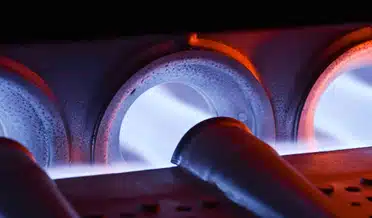
  • Natural gas or propane furnaces ignite and burn gas in a system that must be carefully maintained to function properly and keep the occupants safe. Water vapor from the combustion will create rust. If rust creates an opening in the burner assembly, heat exchanger, or exhaust pipe, it can leak harmful exhaust gas into the home with disastrous consequences.

Maintaining each of these systems is extremely important for continued efficient furnace function.

Is Your Furnace Winter Ready? Schedule Your Preventive Furnace Maintenance Now

Don’t wait until a critical component fails—safeguard your home and health by investing in thorough furnace maintenance. Regular inspections are non-negotiable for detecting the small electrical, mechanical, or chemical stresses that lead to costly breakdowns and safety hazards. Protect your family and extend the life of your unit by contacting us today to schedule your essential preventative furnace maintenance appointment.

Call All Cool AC & Heating now to book your furnace maintenance appointment and prepare for a worry-free winter!

Furnace Maintenance: Detailed Explanation of the Process

Furnace Maintenance

How Furnace Maintenance Protects Your Home and Health

This is the time of year to complete a routine checkup for a residential furnace; this is a responsible maintenance step for homeowners. Check-ups ensure that the furnace is prepared to function properly and efficiently all winter long. Maintenance often uncovers a weakening part that might create a breakdown. Maintenance is much preferred to experiencing a breakdown at the most inopportune time during a deep cold snap.

Furnace Maintenance might seem like a slight, even unnecessary, task. To fully appreciate the work provided by trained professionals, it might be useful to know what happens and why the maintenance tasks are important. So, what is involved in furnace maintenance?

There are three types of furnaces used in our region:

  1. Natural gas-powered furnaces
  2. Electric furnaces
  3. Heat pumps

All three types of furnaces use some of the same components. Maintenance will inspect, clean, and test these components to enhance performance and efficiency. These parts include:

  • Electrical controls. Furnaces employ a complex network of sensors, switches, and control devices that detect temperature, turn various components on and off, and set limits for safe functioning. The current that flows through these control mechanisms ranges from 220 volts to 14 volts; needless to say, it is extremely important to know the difference between electrical currents.
  • The main ON/OFF switch is called the thermostat, that small control device attached to the wall. Thermostats are usually battery-powered, and the checkup will include changing the batteries.
  • A network of ducts transports the heated, conditioned air throughout the home and brings it back to the furnace for redistribution. A heater maintenance visit will include a general inspection of the visible ductwork to uncover glaring problems.

Gas-Powered Furnace Maintenance

These furnaces create heat by the combustion of natural gas. Natural gas is both flammable and explosive. Combustion produces both carbon dioxide and carbon monoxide. Both gases are lethal when introduced to the indoor air. For these reasons, it is vitally important to check the system for safety as well as efficiency.

  • The ignition system receives an electronic signal, calling for a heating/burning cycle. Old systems used a pilot light. New systems use an electronic ignition system to light the flame. Dirt and soot can interfere with proper ignition, so it needs to be carefully cleaned.
  • A burner assembly burns the natural gas in a chamber to collect the heat. Another product of the combustion of natural gas is water vapor. When water vapor contacts cast iron, rust will develop. The burner assembly needs to be inspected and cleaned for both safety and efficiency.
  • The combustion chamber is a heat exchange chamber that transfers the heat to an outer chamber. Rust is corrosive and can create openings in the heat exchanger and exhaust pipe, allowing exhaust to enter the home with disastrous consequences.

Preventive furnace maintenance of natural gas-powered furnaces is very important.

Electric Furnace Maintenance

These furnaces use electrical resistance to create heat. Current passes through a strong heating element and the element gets red hot—about 1,1000 Fahrenheit. Air is passed over the heating elements and blown into the home. Furnace maintenance includes inspection of the elements and controls.

Heat Pump Maintenance

Heat pump furnaces do not create heat; they simply move heat from outdoors. It is the air conditioner in reverse. Instead of moving heat inside the house to the outside, it moves heat from outside the house inside. This will only work efficiently until the outside air drops below 350, when it becomes harder to collect heat from outdoor air. Heat pumps use a heating element system as a backup. Maintenance for a heat pump includes:

  • Testing the refrigerant gas that makes heat transfer possible.
  • Cleaning and inspecting the outdoor condenser coil
  • Cleaning and inspecting the indoor evaporator coil

Boost Performance and Longevity with Regular Furnace Maintenance From All Cool AC & Heating

Don’t risk a breakdown in the freezing cold—ensure your home’s safety and comfort by scheduling your essential furnace maintenance today. The experts at All Cool AC and Heating are ready to inspect your system, enhance its efficiency, and prevent those costly winter surprises. Call All Cool AC & Heating now to book your appointment and prepare for a worry-free winter!

What to Do About an AC Refrigerant Leaks

AC Refrigerant Leaks

Don’t Ignore an AC Refrigerant Leak: Your System Depends on It

As summer winds down and the cooler weather approaches, the trusty air conditioner continues to perform the tasks of cooling, cleaning, moving, and dehumidifying indoor air. However, if an air conditioner’s performance is declining, it should cause a homeowner to take notice and call for an AC maintenance technician to inspect the system. 

Air conditioning systems do not use fuel; they use a manufactured gas, designed to readily transfer heat, deemed a refrigerant or coolant gas. An air conditioner requires a static amount of refrigerant gas to cool the space properly. When the gas pressure decreases, the system tries to continue the cooling process without the proper refrigerant gas. When the air conditioner tries so very hard with inadequate pressure, it will cause crucial components to overheat and fail. This damage is usually very expensive, leading to the replacement of the entire air conditioner system.

AC Refrigerant Leaks? Here’s Why You Need a Pro

What causes a loss of refrigerant pressure? A weakness in the network of tubes that house and transport gas will occasionally result in a minute pinhole, but just enough for the gas to leak away. Since the gas is always under pressure, even a very small hole will release all of the refrigerant gas. Leaks often develop in the weakest portion of the system:

  • Joints between portions of tubing
  • The two major coils, where tubes are bent at 900 angles repeatedly

AC Refrigerant Leaks can also occur whenever the system’s tubing is damaged by contact or movement.

AC Refrigerant Leaks can be very difficult to locate and correct.

  • The leaks are usually very tiny holes, leaking minute amounts of gas. Gas will continue to leak even when the air conditioner is not running, since the gas remains under pressure at all times.
  • When the gas has completely leaked away, it is nearly impossible to locate the source of the leak. Often, additional refrigerant will need to be added to find the leak, knowing the gas will be leaking away.
  • The entire system will need to be checked, both indoor and outdoor components. Some of these components are difficult to reach.

Once the leak has been found and sealed, the whole system will be vacuumed completely to remove the air, various gases, and any other substance that made its way into the tube network. The vacuum will remain in place for a given time as a final pressure check; if a leak remains, the vacuum will be broken, allowing air into the system. The whole process will need to be repeated until all of the leaks have been sealed.

Refrigerants are not environmentally friendly, so it is important to find leaks and fix them quickly. Since they pose a threat to the ozone, the US Environmental Protection Agency is continuously seeking better, more friendly refrigerant gases. Over the last few decades, the EPA has changed the acceptable formulas for residential air conditioning systems.

  • Certain gases have been discontinued and have not been manufactured for several years. The gas for these systems is very scarce, may not be available, and the available gas for these systems is extremely expensive.
  • Certain gases have been discontinued and are no longer being manufactured, but a supply remains available. Refrigerant for these systems may be available, and the gas will be expensive.
  • All refrigerant gases are expensive and should not be allowed to escape into the environment if possible.

If your air conditioner is performing poorly, do not delay. Call us for service to test the refrigerant level. It could save your system from failure, save you money in repairs, and help preserve the environment.

Why an All Cool AC & Heating Professional is a Must for an AC Refrigerant Leak

Addressing an AC refrigerant leak quickly is crucial to prevent expensive damage to your system and protect the environment. Because these leaks are difficult to locate and fix, a professional All Cool AC & Heating technician is required to properly seal the leak and recharge the refrigerant. Don’t delay—call for service to save your system from failure and avoid costly repairs.

Ultimate Guide to Essential AC Maintenance

Ultimate Guide to Essential AC Maintenance

Maximize Your AC’s Lifespan: The Importance of Regular AC Maintenance

The heat and humidity this summer will have your air conditioner running overtime to keep your family comfortable. To give you an idea of how hard it is working, if your thermostat calls for 3 to 4 cooling cycles per hour, your air conditioner will complete between 500 and 700 cooling cycles per week. Since it works this hard each week, and the cooling cycle lasts for 8 months or more, admittedly, it could use some AC maintenance and care.

Essential AC Maintenance Tasks

During an annual AC maintenance visit, our professionally trained technicians will complete some very necessary AC maintenance tasks, including:

  • Replace the air filter. The air filter seems like a rather simple feature of an air conditioner system, but it serves several important functions. It efficiently collects dust and dander, but the collection eventually clogs the filter and limits airflow, thereby limiting the cooling capacity of the AC. (Expect to hear encouragement to replace the air filter quarterly, like clockwork.)
  • Other components also need to be cleaned, notably the condenser coils outdoors and the evaporator coils indoors. These coils transport heat via the refrigerant gas, from inside the home to the outdoors. Dust and pollen collect on the tubes and inhibit heat transfer. Cleaning the dust away is essential for maintaining air conditioning function.
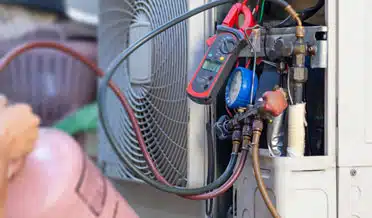
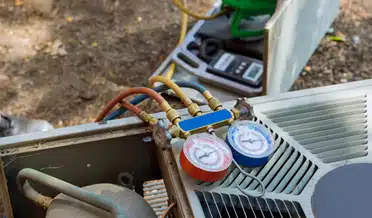
  • Testing and inspection. Various electrical parts are prone to wear, so the technician will use testing equipment to ensure all is well. The refrigerant level will also be tested, since a drop in pressure indicates a leak of the valuable gas.

AC Maintenance Benefits

Completing these tasks will certainly:

  • Reduce repair costs. The testing and inspection is designed to uncover problems with the complex electronic controls while the problems are small. If left undiscovered, the stress of a small problem spreads to other components. A small, inexpensive repair can quickly grow to a much larger, expensive repair.
  • Catching small repairs early usually extends the useful life of the air conditioner system, often putting off replacement by 3 to 5 years.
  • Keeping the system clean and running smoothly improves the energy efficiency of the air conditioner; an air conditioner that works harder requires more energy, costing more money to operate.
  • Keeping the system clean and running smoothly also improves the indoor air quality inside the home.

AC Maintenance Savings

Regular maintenance will result in long-term savings, since:

  • AC Maintenance tends to uncover problems early and allows their repairs before trouble spreads. That usually results in a much smaller repair bill.
  • Since AC maintenance improves efficiency, it usually lowers the monthly electric utility bill.
  • If maintenance extends the useful life of your system, it allows the air conditioner to function three to five years longer, increasing its value and putting off replacement.

The Power of Proactive AC Maintenance From AllCool AC

Given the constant stress placed on your HVAC unit, neglecting its upkeep is a surefire way to invite costly repairs and premature system failure. Regular AC maintenance is a simple yet powerful way to ensure your air conditioner runs efficiently, extends its lifespan, and saves you money on energy bills and future repairs. By scheduling a professional AC tune-up, you are making a smart investment in the comfort and longevity of your home’s cooling system.

All Cool AC & Heating AC repair and AC maintenance professionals can assist with your Katy Texas AC repair and maintenance needs. Schedule your AC service or replacement appointment by calling All Cool AC & Heating at 281-238-9292 or contact us via email, and let our NATE-certified AC Repair Katy technicians help you improve your indoor air quality.

Spring AC Maintenance Checklist

AC Maintenance

Essential Spring AC Maintenance Tips

Springtime is an important time for air conditioning system maintenance.

  • The furnace equipment is now dormant until it is called up in late fall, that is, unless your system uses a heat pump. Heat pumps use the same equipment for heating and cooling.
  • During the early spring, the temperatures are mild, so air conditioning equipment is relatively idle, an ideal time for air conditioning maintenance.
  • When the temperatures begin to soar, the calls for repairs and replacement of air conditioning systems rise as well. Springtime is an ideal time for scheduling a maintenance call with your HVAC professional.

In the meantime, here are some maintenance steps you can take on your own.

Change the Air Filter

Pollen is at its highest during the early spring; trees, flowers, flowering trees, and grass are all releasing pollen at the same time. The pollen count is enough to trigger sinus problems with or without allergies. A springtime air filter change can help everyone breathe easier. The filter should be changed at least every three months, more frequently if necessary.

Air filters work tirelessly to clean the air, removing pollen, dust, dander, and more. However, when the trapped particles completely cover the filter, it begins to restrict proper airflow. The very best air conditioning technology cannot function properly without adequate airflow.

Clean the Condenser

The outdoor portion of the air conditioner is called the condenser unit. The walls appear to be solid, but the walls are actually a network of tubes, designed to allow considerable airflow between. A central fan pulls air through the tubes, but it also pulls pollen, dust, and all kinds of debris. Pollen is sticky. It sticks to the tubes and fins, and the pollen tends to collect anything other small particles it encounters.

Cleaning the pollen and debris from the condenser is an easy DIY project. Remove the screws around the cover of the condenser and use a garden hose to gently wash away the collected particles. Wash the tubes until the water flows clear, then replace the covers.

Should the pollen and dust continue to coat the condenser, this makes the air conditioner work MUCH harder and it can lead to some serious repair bills. This is a simple task that can be completed with a few tools and a little bit of time.

Change Batteries

The thermostat is the ON/OFF switch for your air conditioner. It is a very small computer with sensors and switches that control a whole, complicated building system. This small computer is powered by common household batteries, and the batteries need to be changed. Matter of fact, there are several small sensors/switches in the home that run on batteries, including smoke alarms and carbon monoxide detectors. Find a time in the spring and change all of your batteries at once.

Schedule Professional AC Maintenance

These are DIY tasks that can be completed by a homeowner. There are plenty of air conditioner maintenance tasks that need to be completed but cannot be completed by a homeowner. They take special equipment and the training to use it properly. Professional technicians test and clean:

  • The refrigerant level
  • Electrical controls and switches, some with high-voltage 
  • Functional performance of the air conditioner

Springtime is an excellent time to schedule AC maintenance.

Don’t Wait for the Heat: Spring is Key for AC Maintenance

All Cool AC & Heating AC maintenance professionals can assist with your HVAC repair and AC maintenance needs. Schedule your service appointment by calling All Cool AC & Heating at 281-238-9292 or contact us via email and let our NATE-certified AC maintenance technicians put their experience to work for you.

Spring HVAC Maintenance Tips

Spring HVAC Maintenance Tips

Spring into Comfort: Spring HVAC Maintenance

YeeHaw! Spring is almost here! With the end of winter days away, this is the perfect time to schedule a preventative HVAC maintenance visit for your heating, ventilation, and AIR CONDITIONING (HVAC) system. In a few months, the heat will arrive in earnest and keep technicians busy through the long cooling season. The lull in activity between the heating and cooling seasons is perfect for such tasks.

While the HVAC maintenance technician will complete several tasks that require specialized training and equipment, there are several tasks that diligent homeowners can complete to improve efficiency, longevity, and comfort. Here are a few HVAC maintenance steps that homeowners can take to prepare the system for spring and summer.

Take Care of Vents

A network of pipes (ducts) transports air from the house to the air handler and from the air handler to the house. The pipes are called ducts, and the openings inside the house are called vents.

  • Anything that covers the vents interferes with the free flow of air. The air conditioner, or furnace, depending on the season, requires sufficient airflow; if clothing, furniture, or drapes cover the vent(s), it impedes the adequate flow of air.
  • The massive amount of air that moves through the ductwork also carries plenty of airborne particles. Over time, some of these particles are collected by the air filter and some are left behind. It is recommended that the ductwork be cleaned every 3 to 5 years, depending on the local environment.

Keep an HVAC Maintenance Schedule

There are certain things that homeowners need to remember to do regularly. Neglecting these routine tasks can have deleterious consequences. To avoid harm to the HVAC system or the home, there are a few things that deserve a calendar prompt to remind homeowners to complete the tasks. Those tasks would include:

  • Changing the air filter quarterly. With each heating or cooling cycle, the filter faithfully removes airborne particles on the filter surface. When the collection begins to restrict airflow, it reduces comfort and forces the system to work harder. Use a holiday or a seasonal reminder, use a calendar or a phone prompt, but don’t forget.
  • Several home devices are powered by simple AA or AAA batteries; the thermostat, carbon monoxide detector, and all the smoke detectors throughout the home are battery-powered. Safety agencies recommend using a major holiday as an annual prompt—Memorial Day or Labor Day, for instance.

Clear the Condenser

During the preventative maintenance visit, the technician should clean the outdoor condenser unit. However, the homeowner should take careful pains to keep the condenser clean.

  • The condenser is responsible for transferring heat from inside to outside. Should dust, pollen or grass clippings collect on the condenser surface, it will impede the heat transfer. Cleaning it away, perhaps twice annually, will assist the air conditioner (and heat pump). Use a garden hose, no power washer, since the pressure of the power washer can damage the condenser fins.
  • The mower outlet should always pass away from the condenser for several passes to avoid blowing clippings directly onto the condenser surface.
  • For best results, the condenser needs two feet in every direction. Be sure to trim shrubs and grass away from the condenser and clean up leaves and debris.

Get Your HVAC Ready for Summer: Essential Spring HVAC Maintenance Tips

By addressing these simple yet crucial HVAC maintenance tasks, homeowners can significantly enhance their system’s efficiency and longevity, ensuring a comfortable and worry-free summer. From clearing vents and adhering to a regular filter replacement schedule to maintaining a clean condenser, these steps contribute to optimal performance and reduced energy consumption. Embracing these preventative measures not only safeguards your investment but also guarantees a cooler, more enjoyable home during the sweltering months ahead.

All Cool AC HVAC maintenance professionals can assist with your HVAC repair and HVAC maintenance needs. Schedule your service appointment by calling All Cool AC & Heating at 281-238-9292 or contact us via email and let our NATE-certified HVAC maintenance technicians put their experience to work for you.

6 Winter AC Maintenance Katy Tasks

6 Winter AC Maintenance Katy Tasks

AC Maintenance Katy Tasks to Complete Before Winter

It is still warm, but cold weather is still coming. For the next few months, we can count on some cold nights and the occasional (and inconvenient) Alberta Clipper shaking things up a bit. That means homeowners need to pay attention to the furnace system in preparation.

AC Maintenance Katy Task 1

If you have not scheduled a preventative maintenance visit by your preferred HVAC professional. Preventative maintenance includes accessing and testing electrical components with specialized equipment. Regular PM visits help catch glitches while they are small and avoid many major repairs. These visits should be scheduled in the off-peak seasons—spring or fall.

AC Maintenance Katy Task 2

The most important do-it-yourself maintenance task for homeowners is changing the air filter regularly. (That term often appears in HVAC care.) Air filters collect airborne particles with every cooling and heating cycle, but after a few months, the dust collection threatens to clog the filter. A clogged filter restricts the airflow and forces the whole system to work harder—especially the blower motor.

AC Maintenance Katy Task 3

Make sure to change the batteries in the thermostat annually. This ON/OFF switch has a mini-computer with a very low-voltage system, but it will not work without power. It is programmable, so select the temperature setting and schedule temp changes to meet the family routine.

While you have new batteries, change the batteries in smoke and carbon monoxide detectors as well. They are not directly tied to the furnace but provide important safety alerts in case something goes wrong.

AC Maintenance Katy Task 4

Clean the area around the furnace. If your home has a mechanical closet for the HVAC system, it should not be used as a storage closet. Whether it uses natural gas or electricity, the furnace gets hot enough to ignite paper, wood, and most clothing; most household items that might be stored near a furnace are combustible. Take time to remove items at least 2 feet from the furnace. Remove any cobwebs and sweep the area thoroughly as an extra fire safety measure.

AC Maintenance Katy Task 5

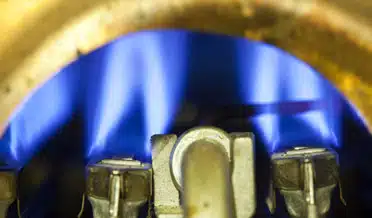
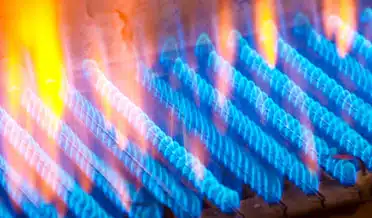
If you have a natural gas furnace, observe the burner assembly, checking for rust or excess soot. Turn the furnace on and observe the flame. The flame should be blue; a yellow flame is unhealthy and needs to be checked by a professional.

If you have a heat pump, make sure the outdoor condenser coil has been cleaned with a garden hose. Rake leaves and lawn debris away from the base of the unit and trim shrubs or decorative grass at least 2” in every direction.

AC Maintenance Katy Task 6

Fall is a good time to check attic insulation and the weather-tight seal around windows and doors. A 1/8” gap along the side of a 24” window is the equivalent of an opening in the wall 1” x 3”. These gaps let in more cold air than you might think, so now is the perfect time to close them up. First, feel for drafts around each window and door. Second, carefully run an incense stick or lit candle around the edges of each window and door. Home improvement stores carry the appropriate caulk to apply to weatherproof the openings.

While the temperatures are mild, stick your head into the attic to examine the insulation quality. A nice carpet of insulation approximately 12” deep should blanket the entire attic. Adding insulation whenever needed can make a home much more comfortable year-round.

AC Maintenance Katy Task 7

If it has been a while since the ducts were cleaned, investigate further and consider cleaning the ductwork. Whenever the air stops moving during a heating or cooling cycle, the heavier-than-air particles begin to sink to every surface including the insides of ducts. After a few years, a thick layer of dust can accumulate. This does not interfere with HVAC operation, but it does contribute to poor indoor air quality.

Prepare Your Home for Winter: Essential AC Maintenance Katy to Prevent Breakdowns and Boost Efficiency

Winter AC maintenance Katy is crucial to ensure your system operates efficiently during the colder months, preventing unexpected breakdowns and costly repairs. Regular maintenance, such as inspecting the furnace, cleaning ducts, and replacing filters, helps improve energy efficiency and indoor air quality. AC maintenance Katy technicians at  All Cool AC & Heating will ensure thorough inspections, expert care, and peace of mind that your system is ready to keep you comfortable all season long. Contact us at 281-238-9292 or contact us via email.

Spring HVAC Maintenance Checklist

Spring HVAC Maintenance Checklist

HVAC Maintenance Spring Checklist

While it is still a little chilly outside, every indication is that we will have an early Spring. That is mostly good news for Texans. After all, we had several harsh winters in a row, and an early spring is welcome news. We will comfortably enjoy being outdoors earlier and more often. It also means that the cooling season will begin earlier for indoor spaces. Is your air conditioner system ready? Is it time for a preventative HVAC maintenance visit?

All Cool recommends an annual HVAC maintenance visit to ensure your cooling system is ready for the long cooling season. This visit will include:

A Thorough Cleaning

  • Start with a new air filter. The air filter collects airborne particles with every heating and cooling cycle, but when the collected particles become too thick, the clog restricts airflow. Your air conditioner depends on huge amounts of air passing through the evaporator chamber to remove humidity and cool the air. A new filter ensures clean air and unrestricted airflow.
  • Rinsing the evaporator coil. This coil stays wet all summer long since moisture from the air hits the cold evaporator metal. Any dust that makes it past the filter tends to collect on the coil. The buildup of dust particles inhibits the transfer of heat, making your system work harder.
  • Flush away any debris from the drain pan. The moisture from the evaporator coil drains into a pan below and empties into a drain line. Any dust or debris can result in a clogged drain line and water leaking onto the floor in the surrounding area.
  • Clean the outdoor condenser unit. All winter long, the wind has been blowing leaves and debris around and even inside the condenser unit. These will need to be cleaned away. The condenser also needs substantial airflow for heat transfer, so lawn clippings and dirt will need to be washed off the condenser coil and fins. Often, any bent condenser fins can be carefully straightened to enhance the efficiency of the unit.

Electrical Testing

  • All things thermostats. The thermostat is the ON/OFF switch for the air conditioner, responding to sensors that call for cooling when the place warms up. They run on battery power, so the batteries will be changed, and the settings adjusted as needed.
  • The whole system functions on a series of sensors and control components. Electrical testing equipment can uncover failures and weaknesses; replacing or repairing these parts can prevent stress and failure over a long cooling season.
  • The technician will be looking for common problems or a repetition of electrical failures.

Gas Pressure Testing

  • Freon pressure tests. Residential air conditioners use one of several refrigerant gases, commonly called freon. The cooling process requires a range of gas pressures; a loss of pressure often causes catastrophic system failure. Gas will be added to bring the pressure within the appropriate range.
  • Leak detection. If the closed system is losing gas, the system is leaking. Any leaks will come with a recommendation—for obvious reasons—for a leak repair.

Function Testing

After all the components are cleaned and tested, the cooling function of the system will be tested to ensure it works properly. The goal is for the air conditioner to cool efficiently all summer long and for many seasons to come.

Call the HVAC Maintenance Experts at All Cool AC!

Schedule your HVAC Maintenance consultation by calling All Cool AC & Heating at 281-238-9292 or contact us via email and let our NATE-certified HVAC Maintenance technicians put their experience to work for you.


HVAC Maintenance Tips for Pet Owners

HVAC Maintenance Tips for Pet Owners

HVAC Maintenance: What Pet Owners Need to Know

One of the unique features of homes in the U.S. is the presence of indoor pets in a large majority of homes. In more than 80% of homes—86.9 million houses and apartments—you will find families petting and cuddling with a wide variety of (mostly) domestic animals.

The most common pets are dogs (44 million) and cats (29 million); some homes have both cats and dogs or multiples of each. Fifty-eight percent of single-family homeowners and 36% of apartment dwellers invite pets inside.

Homeowners who welcome pets into their homes receive emotional companionship and satisfaction, they also accept some airborne hazards that come with the pets. Most dogs and cats shed hair and all shed skin cells, just like their human companions.

An interesting fact—skin cells from humans are a major part of indoor dust, while pet skin cells are called dander. These airborne particles contribute to allergy and asthma attacks and can lead to other breathing difficulties. Dust, dander, and hair also negatively affect the function of a central AC system making HVAC Maintenance a necessity to maintain indoor air quality.

Individual dust and dander particles are barely perceptible and seem to pose no problem. However, a high concentration or accumulation of these particles does have a very negative effect on the system and family members.

  • The particles irritate the eyes and sinuses of family members, triggering allergies and asthma.
  • Gravity causes the particles to fall and coat many household surfaces. Pet hair and dander contribute heavily to dust.
  • These particles coat ductwork surfaces and can be difficult to reach for cleaning.
  • Particles eventually clog the air filter, and it must be changed regularly; multiple pets will require more frequent changes.

If your home includes one or more indoor pets, here are several steps to balance companionship and quality indoor air.

  • Clean often, making sure to dust, mop, and vacuum every surface possible. How often you need to clean will depend on the breed and number of your pets.
  • Your choice of pet might also affect your choice of vacuum cleaner and mop.
  • If you use area rugs, purchase indoor/outdoor whenever possible. They are easier to clean.
  • Make sure to paint and install surfaces that are easy to clean; washable paints and stains are a good start.
  • Consider using common shaving cream to remove stains without damaging fabrics.
  • Mix a 50/50 mixture of water and vinegar, then add a couple of drops of dishwashing liquid to clean hard surfaces.
  • Use a baby wipe and a wooden skewer to clean cracks/seams on hard surfaces.
  • Buy cheap throws to cover furniture, protecting them from hair, stains, and scratches.
  • Be sure to groom your pet regularly as recommended by the breeders and your veterinarian.

Pay attention to your HVAC air filter. The filter collects the majority of airborne particles and keeps the indoor air quality significantly cleaner and healthy. However, the collected dust, dander, and pet hair can completely clog the filter, restricting airflow.

This puts tremendous stress on the HVAC system and reduces its efficiency. If the filter is clogged at three months, check it at two months and change it as needed.

Pets in a home increase the necessity of regularly scheduled preventative maintenance visits. These visits include cleaning interior components and inspecting vital controls and switches. The common guideline is to clean ducts every three to five years, but the type and number of pets in your home might require additional cleaning.

Don’t forget to keep your pet comfortable in your absence. If you change the thermostat setting while the family is away as a cost-saving measure, make sure that the setting does not make your pet(s) uncomfortable.

If you are a pet owner looking for HVAC maintenance, give us a call!

Schedule your HVAC maintenance consultation by calling All Cool AC & Heating at 281-238-9292 or contact us via email and let our NATE-certified HVAC maintenance and HVAC repair technicians put their experience to work for you.


Furnace Maintenance Checklist for this Winter

Furnace Maintenance

Furnace Maintenance Tips to Avoid Heater Problems

HVAC professionals always recommend furnace and air conditioner maintenance programs and, since we say it so often, it might sound like background noise to your life. Each day, a massive amount of information clamors for the attention of American homeowners. However, technicians perform a variety of furnace maintenance tasks that are vital to keeping your furnace running strong all year long and for years to come. Furnace Maintenance tasks may include:

Changing the Air Filter

This simple chore is essential since the furnace requires the movement of air: the entire volume of air should move through your furnace about every 2 minutes of a heating cycle. A clogged filter can leave you feeling a little chilly on cold days. It also creates stress on your entire heating system.

Check the Ductwork

Only a portion of the network of ducts will be visible after construction is completed. However, observation of the visible portion can tell us:

  • How clean or dirty the ducts are. This is mostly an air quality issue.
  • Potential leaks in the portion that is visible. Repairing any leak that can be observed will improve efficiency and comfort.

Clean the Blower Fan

The amount of dust that collects on moving parts is crazy—how often does the ceiling fan need to be cleaned? The blower motor is a cylindrical fan that is responsible for moving air during heating and cooling cycles. Dust reduces the efficiency of the fan and reduces the amount of air movement.

Check Electronics Thoroughly

  • A series of sensors measure your indoor environment and send messages to the furnace system. The most noticeable sensor is in the thermostat; it measures air temperature and sends a signal calling for a heating cycle as needed. The thermostat needs to be tested and calibrated as needed. Other sensors are located throughout the system, sensing flame or the presence of smoke or carbon monoxide. These essential sensors need to be cleaned and tested regularly.
  • Beyond the sensors, a complex network of electrical switches and controllers manage the energy needed to keep occupants warm and comfortable. When one of these components weakens, it creates a cascade of stress on other system components. Simple voltage tests can detect stress or weakness, ensuring a small problem does not develop into a large problem.
  • Another set of safety controllers prevents damage or injury should a problem create an overload or short-circuit.

Gas System Furnace Maintenance

  • It is extremely important to regularly inspect your gas supply line and connections to prevent damage, injury, and death.
  • The gas pressure needs to be checked at the manifold to ensure adequate flow to the burner.
  • The most delicate part of a gas-powered system is the ignition/pilot light assembly. A pilot light should burn blue, with a hint of yellow at the base. This indicates complete combustion.
  • A flame sensor can accumulate soot and dust, interfering with burner ignition.
  • Rust and soot can develop on the pilot light and burner assembly and need to be cleaned away for good performance.
  • The heat exchanger and flue pipe need to be cleaned and inspected for damage regularly. Rust can weaken the walls of these structures, allowing carbon monoxide and carbon dioxide to leak into the home.

General Observations

Furnace Maintenance inspections will also test furnace function by measuring temperature changes during a heating cycle; these measurements will be taken from various spaces to ensure proper the system is heating efficiently.

Leave Furnace Maintenance and Repair to the Experts!

Schedule your furnace maintenance consultation by calling All Cool AC & Heating at 281-238-9292 or contact us via email and let our NATE-certified furnace maintenance and heater repair technicians put their experience to work for you.