
Furnace Maintenance Checklist for this Winter

Furnace Maintenance

Furnace Maintenance Tips to Avoid Heater Problems

HVAC professionals always recommend furnace and air conditioner maintenance programs and, since we say it so often, it might sound like background noise to your life. Each day, a massive amount of information clamors for the attention of American homeowners. However, technicians perform a variety of furnace maintenance tasks that are vital to keeping your furnace running strong all year long and for years to come. Furnace Maintenance tasks may include:

Changing the Air Filter

This simple chore is essential since the furnace requires the movement of air: the entire volume of air should move through your furnace about every 2 minutes of a heating cycle. A clogged filter can leave you feeling a little chilly on cold days. It also creates stress on your entire heating system.

Check the Ductwork

Only a portion of the network of ducts will be visible after construction is completed. However, observation of the visible portion can tell us:

  • How clean or dirty the ducts are. This is mostly an air quality issue.
  • Potential leaks in the portion that is visible. Repairing any leak that can be observed will improve efficiency and comfort.

Clean the Blower Fan

The amount of dust that collects on moving parts is crazy—how often does the ceiling fan need to be cleaned? The blower motor is a cylindrical fan that is responsible for moving air during heating and cooling cycles. Dust reduces the efficiency of the fan and reduces the amount of air movement.

Check Electronics Thoroughly

  • A series of sensors measure your indoor environment and send messages to the furnace system. The most noticeable sensor is in the thermostat; it measures air temperature and sends a signal calling for a heating cycle as needed. The thermostat needs to be tested and calibrated as needed. Other sensors are located throughout the system, sensing flame or the presence of smoke or carbon monoxide. These essential sensors need to be cleaned and tested regularly.
  • Beyond the sensors, a complex network of electrical switches and controllers manage the energy needed to keep occupants warm and comfortable. When one of these components weakens, it creates a cascade of stress on other system components. Simple voltage tests can detect stress or weakness, ensuring a small problem does not develop into a large problem.
  • Another set of safety controllers prevents damage or injury should a problem create an overload or short-circuit.

Gas System Furnace Maintenance

  • It is extremely important to regularly inspect your gas supply line and connections to prevent damage, injury, and death.
  • The gas pressure needs to be checked at the manifold to ensure adequate flow to the burner.
  • The most delicate part of a gas-powered system is the ignition/pilot light assembly. A pilot light should burn blue, with a hint of yellow at the base. This indicates complete combustion.
  • A flame sensor can accumulate soot and dust, interfering with burner ignition.
  • Rust and soot can develop on the pilot light and burner assembly and need to be cleaned away for good performance.
  • The heat exchanger and flue pipe need to be cleaned and inspected for damage regularly. Rust can weaken the walls of these structures, allowing carbon monoxide and carbon dioxide to leak into the home.

General Observations

Furnace Maintenance inspections will also test furnace function by measuring temperature changes during a heating cycle; these measurements will be taken from various spaces to ensure proper the system is heating efficiently.

Leave Furnace Maintenance and Repair to the Experts!

Schedule your furnace maintenance consultation by calling All Cool AC & Heating at 281-238-9292 or contact us via email and let our NATE-certified furnace maintenance and heater repair technicians put their experience to work for you.


Why Furnace Repair is Not a DIY Project

Furnace Repair

Why You Should Leave Furnace Repair to the Experts

Many homeowners are pleased to do small jobs around the house but would not consider tackling projects outside their comfort zone. Other homeowners have a pioneering spirit and a penchant for frugality. They consider new challenges exciting. With a host of tutorial videos and several chains of home improvement centers, their independent, do-it-yourself attitude can push the limits.

Some home improvement projects should be left to professionals and making furnace repairs falls into this category.

Home furnaces are an integral building system that keeps the family comfortable, healthy, and safe. The components are complex, and may include:

  • Electrical sensors and controls
  • Refrigerant gas technology, the same gas used during the cooling season, and
  • Natural gas

There are a multitude of manufacturers, with several generations of innovation, so the chances of finding the right tutorial and the corresponding part for specific repairs are quite slim. So many things can go wrong . . .

Potential Electrical Hazards

The wiring that sends messages between the thermostat and furnace components carries 14 volts. The wiring that activates the heating element carries 220 volts. Other wires carry 120 volts. Someone accidentally contacting any of these wires will be shocked, but one better know the difference, since the resulting shock will be very different.

Accidentally crossing the wires can also develop a fire hazard. There is no substitute for proper training and experience when repairing furnaces.

Potential Gas Hazards

Being prepared to repair any furnace on the market requires familiarity with at least three gases, and rarely will homeowners have the necessary training to handle all three.

  • Some furnace units use a heat pump component, which utilizes the same refrigerant gas (commonly referred to as Freon) as the air conditioning process. The air conditioning process is reversed, bringing heat from the outside indoors.
  • Some units use natural gas or propane as fuel to warm a home. Service requires knowledge of gas supply and there can be no mistakes with these explosive gases. A leak is serious, potentially leading to asphyxiation and an explosive fire.
  • The burners for gas furnaces need careful cleaning and inspection. The ignition source and mixture with oxygen must be precise and getting it right can be extremely frustrating.
  • Don’t forget the exhaust from burning natural gas. This gas enters a heat exchange chamber, and the radiant heat warms the air which eventually warms the home.

A portion of the exhaust is steam which causes rust to form on the walls of the heat exchanger; the heat exchanger must be inspected regularly. If the exhaust leaks into the home, the colorless, odorless carbon monoxide will asphyxiate occupants.

A video tutorial cannot cover the vocational furnace repair training and years of experience. Call a professional technician to service and repair your furnace this heating season.

Leave Furnace Repair to the Experts!

Schedule your furnace repair consultation by calling All Cool AC & Heating at 281-238-9292 or contact us via email and let our NATE-certified HVAC maintenance and furnace repair technicians put their experience to work for you.

HVAC System Hurricane Preparedness

HVAC System Hurricane Preparedness

HVAC System Hurricane Preparedness

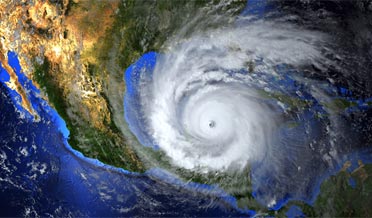
The NOAA Atlantic Hurricane Season outlook predicted between 14 and 21 named storms for this season, 6 to 11 storms developing into hurricanes, and 2 to 5 storms developing into major hurricanes. The 2023 season is living up to the prediction, with 15 named storms, 6 hurricanes, and three major hurricanes so far. Fortunately, the only major storm hurricane to make landfall was Lee. However, there are still two months left in this year’s season.

If you have lived in a hurricane-prone area for many years, you are aware of preparedness plans for various aspects of life. This is a hurricane preparedness plan for HVAC systems in the area.

Pre-season HVAC System Hurricane Preparedness

There are some general and specific preparation steps that you can take any time before the storm arrives, but they should not be attempted during the storm.

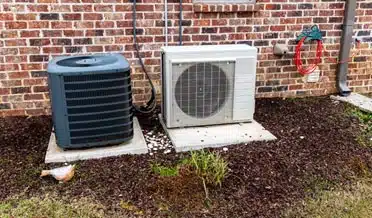
  • Trees and tree limbs may endanger a home and the immediate surroundings when hurricane-strength winds arrive. Remove trees and limbs that can damage the structure of the house and remember to protect the outdoor air conditioner condenser unit.
  • Find hurricane straps for the condenser unit, to secure it to the pad beneath it. Strong winds can pick the unit up and make it a dangerous airborne projectile. Consider buying a canvas condenser cover or making one from plywood.
  • Determine in advance whether to invest in a whole-house or portable emergency generator. Such plans take time to install a transfer switch, permanently install the generator, and plan for fuel storage.

Pay Attention

Hurricanes do not sneak up on people on the coast—storms are tracked across the Atlantic and a rather specific landfall is predicted several days ahead in advance. This gives residents several days to make minute plans before the storm arrives.

  • A part of that plan includes determining if and when your family will evacuate for severe hurricanes since evacuation is ill-advised during the storm.
  • Storing food, water, medicine, and emergency supplies is an essential part of preparedness.

Two Days Prior

  • Begin to cool the house down about 2 days before the storm arrives. The air conditioner should be shut off during the storm to avoid damage from power surges, so lower the thermostat by 5 to 10 degrees for comfort during the storm. This will cool the interior and furnishings in addition to the air.
  • If your preparedness plans include covering windows, now is the time to complete this task.

Hours Before

  • A severe storm will include a storm surge to the coastline, sustained winds of more than 100 mph, and torrential rainfall. The danger from lightning-induced power surges is very high, so flip the breaker at the service panel to shut the HVAC system off. If your home is supplied with natural gas, close the gas valve as well in case of structural damage.
  • If you prepared a condenser unit cover, now is the time to install and secure it. Do not run the air conditioner with the condenser covered, as this will lead to catastrophic system failure.
  • Go inside and stay inside until the winds subside. Stay tuned to local news/weather stations as long as possible.

When Calm Returns

After the storm itself, it will make some careful observations of the immediate surroundings. The power may be out for a while, which is why your plan included cooling the house before the storm.

  • Look for downed power lines and structural damage to the home. Remember, the ground will be saturated, so give downed wires a wide berth.
  • Remove the cover and inspect the condenser unit for damage. The materials that compose the condenser walls are thin and fragile. Look for an oily substance and listen for the hiss of escaping gas.

When the power grid is restored and you believe the HVAC system is intact, flip the circuit breaker to restore power to the HVAC system. Lower the temperature of the thermostat settings by a few degrees and determine whether the system is functioning properly.

Have questions about HVAC System Hurricane Preparedness, We Can Help!

Schedule your HVAC System Hurricane Preparedness consultation by calling All Cool AC & Heating at 281-238-9292 or contact us via email and let our NATE-certified HVAC Maintenance and HVAC repair technicians put their experience to work for you.
A Healthy Home Has Great Indoor Air Quality

A Healthy Home Has Great Indoor Air Quality

A Healthy Home Has Great Indoor Air Quality

How to Achieve the Best Indoor Air Quality

With the coming of Fall, a new allergy season approaches; this time, it will be ragweed season. In the Winter, mold spores are prevalent because of the moisture (theoretically anyway). In the Spring, it is tree pollen, and, in the Summer, grass pollen takes over.

Most of us love being outdoors, which makes our homes and vehicles a “clean air” refuge. For that reason, maintaining indoor air quality is very important. Here are a few steps towards improving air quality in your home.

Balance

An important aspect of indoor air quality is recirculating the volume of air inside your home. Without circulation, pollutants generated by normal household materials and activities will accumulate. Outdoor air dilutes the amount of these pollutants trapped inside your home.

However, the outdoor air also contains large quantities of pollen, spores, and exhaust; some of these outdoor pollutants cause more severe allergic reactions than the pollutants indoors. This balance is individual with each home but balancing the indoor and outdoor air quality is very important.

Regular Cleaning

That might sound a little odd, but many of the airborne particles that float around in your indoor air end up falling to various surfaces—floors, furniture, bedding, and ceiling fans. Definitely ceiling fans!

Families understand the importance of regular house cleaning but might not associate it with indoor air quality. Every bit of dust, pollen, and dander removed from the floor with a mop or vacuum cleaner is removed from the air permanently. The same is true for grooming, laundry, and dusting.

Air Filters

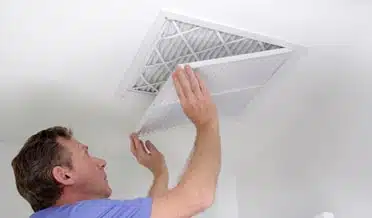
Every HVAC system is equipped with an air filter; the air pulled from the home is filtered before it is cooled or heated and returned to the home. The filter faithfully removes air particles with each cycle, and, after a few months, the filter can become completely covered. A clogged filter interferes with airflow and the function of both the air conditioner and heater.

Therefore, an important step to improve air quality is to change the air filter regularly—at least every three months. Changing the filter removes a large amount of dust permanently from the home.

Air filters are manufactured to capture a percentage of airborne particles of a given size. It is tempting to purchase an air filter that captures the smallest particles. However, residential HVAC systems aren’t equipped to use those ultra-fine filters, since they create too much air resistance.

Clean Vents

All that dirty air moves through a network of air ducts, connecting the entire home with the central heating and air conditioning system. Some of the particles find a way to connect to the duct walls and cleaning the ducts removes the airborne particles from the home permanently. How often should you clean vents? It is recommended that vents be cleaned every three to five years.

Regular Maintenance

Another cleaning step is to schedule an annual maintenance cleaning by an HVAC technician. This includes cleaning harder-to-reach areas, including the evaporator chamber, drain line, and condenser coil. This inspection goes well beyond mere cleaning and improves the efficient function of your HVAC system.

Further Steps

If a family has specific health needs concerning air quality, further steps might include adding ultraviolet lights to the ductwork to neutralize organic air particles, such as dust mites and mold spores, or a room air purifier to remove pollutants, including odors, from a designated space.

Need Help Achieving Better Indoor Air Quality, We Can Help!

Schedule your free indoor air quality consultation by calling AllCool AC & Heating at 281-238-9292 or contact us via email and let our NATE-certified HVAC Maintenance and indoor air quality technicians put their experience to work for you.

3 HVAC Maintenance Tips to Improve Efficiency

3 HVAC Maintenance Tips to Improve Efficiency

3 HVAC Maintenance Tips for Homeowners

Air conditioning is such a comfort during the long, hot summertime. All winter long, we look forward to summer fun in the sun. However, since the heat and humidity are so relentless, we seek relief whenever we go inside. Air conditioning has become so essential to our summer. It would be nice to find ways to enhance the air conditioning experience. Here are a few suggestions to enhance your HVAC Maintenance experience.

1 Keep the Heat Outside and the Cool Inside

This seems like a no-brainer, but to do it well it takes intentional actions.

  • The quality of insulation will become very evident during times of extreme temperatures—both hot and cold temperatures. Getting into the attic to add insulation during triple-digit or single-digit temperatures is not a wise decision. However, preparing for extreme temps while the temps are mild is a wise decision.
  • Windows transfer a tremendous amount of energy in the form of heat into the home. Sunlight is not the problem; it is the accompanying infrared energy that creates the heat. Floor and furniture surfaces are heated and retain the heat. Additionally, heat passes through glass readily, heating the inside air. Keep blinds and drapes closed during the midday period, opening them in the mornings and evenings to enjoy the natural light.

2 Keep the Thermostat Steady

It is tempting to use the thermostat inside like the fan switch on our car’s air conditioner, turning it up when you enter and down when the temperature drops. That might work in the small confines of a car, but it doesn’t work for a home air conditioner.

  • When the thermostat is set at 740 and the temperature rises to 750, the thermostat instructs the air conditioner to begin cooling the air. The cooling cycle may last for 5 to 10 minutes if it is functioning normally. Dropping the thermostat to 640 will also instruct the air conditioner to begin cooling the air. It will also take 5 to 10 minutes or so—not a minute less. Dropping the thermostat setting does not cool the space faster, but it does put tremendous stress on the air conditioner.
  • A better approach is to schedule the temperature setting, including any changes you might desire, and let the air conditioner do its job. If your family has a steady summertime schedule—leaving and returning at regular intervals—temperature changes can be programmed to coincide with the schedule. Program temperatures change and do not alter the schedule.

3 Schedule Filter Changes and HVAC Maintenance

Homeowners can enhance their air conditioner system by keeping it clean. Change the air filter regularly to keep indoor air clean and ensure a free flow of air. Scheduling annual preventative maintenance increases the performance of air conditioners and uncovers small problems before they become big problems.

We Specialize in HVAC Maintenance to Reduce Your Utility Bills

Schedule your free HVAC Maintenance consultation by calling AllCool AC & Heating at 281-238-9292 or contact us via email and let our NATE-certified HVAC Maintenance technicians put their experience to work for you.
HVAC Efficiency: Vaulted Ceilings Pros and Cons

HVAC Efficiency: Vaulted Ceilings Pros and Cons

HVAC Efficiency: How Vaulted Ceilings Affect Your AC System

As a design feature, vaulted and high ceilings remain very appealing for home buyers. These relaxing features often add natural light and add space without adding square footage. If your dream home features vaulted or high ceilings, there are some HVAC Efficiency details you should be aware of that affect heating and air conditioning functions.

Stating the Obvious—Heat Rises

Air molecules that absorb heat energy move more and are lighter, while molecules that have lost their heat energy are heavier and sink. This is true on a global scale and inside every home. Healthy indoor air quality requires air circulation and hot air stubbornly tries to stay high, resisting movement. Vaulted ceilings often have a thinner insulation layer, which serves to keep the air heated.

Problems develop when hot air resists movement in high ceilings.

  • That air becomes rather stale, and it doesn’t get cleaned often via the air filter.
  • Painted or stained surfaces suffer when constantly exposed to hot, moist air.
  • Stubborn hot air is helpful during the cooling season, keeping cool air down and hot air up. However, it is hard to overcome during the heating season because the furnace must work hard to heat higher spaces before the living area is heated.
  • The HVAC system works harder in both the heating and cooling seasons, trying to move that hot air. This places undue strain on the blower motor.

Potential Solutions

Sizing. The HVAC system in each home is customized for each home with a formula called a load calculation. A technician collects information, including square footage, insulation level, number of windows, and doors. High ceilings are a factor in determining the proper size of your system and the technician will add load for each foot of added space in each room. Little can be done with an existing HVAC system but make sure that the load calculation for your next replacement takes high ceilings into the calculation.

Circulation. Moving stubborn hot air is essential and can be accomplished by several means.

  • Using ceiling fans properly can move efficiently during both the cooling and heating seasons, but it requires a little information. Ceiling fans can turn in both a clockwise and counterclockwise rotation and the direction affects air movement. The counterclockwise rotation pushes air down and should be used during the cooling season. This mixes the air and allows the air conditioner to remove humidity while cooling the air. The clockwise rotation pulls air up during the heating season, pushing warm air out and down for comfort and mixing. Ceiling fans installed in vaulted ceilings usually have remote controls with rotation control.
  • When a heating or cooling cycle begins, supply air is pushed into space via vents, usually located on the floor. At the same time, air returns to the central cabinet via plenums found high on the wall on each story. Adding a plenum in or near a vaulted ceiling can adequately move the stubborn air resisting normal airflow.
  • It is generally best to leave the air conditioner fan in the hot, humid summer. Moving air is easy to keep moving, compared to trying to move stationary air.

Mini-split ductless solutions. Mini-split systems do not use ducts to move air but circulate air with small, room-sized air handlers. With this approach, the vaulted area can be zoned separately, and an air handler unit installed. This ensures that the air is being cooled and cleaned regularly.

We Specialize in HVAC Efficiency to Reduce Your Utility Bills

Schedule your free HVAC Efficiency consultation by calling AllCool AC & Heating at 281-238-9292 or contact us via email and let our NATE-certified HVAC technicians put their experience to work for you.

AC Maintenance: Best Air Filter for Your HVAC System

AC Maintenance

AC Maintenance: Best Air Filter for Your HVAC System

AC Maintenance: HEPA Filters vs Merv Filters

We all acknowledge the importance of air filters since they successfully remove dust, pollen, dander, and mold spores. They clean indoor air but also keep dust from interfering with the function of HVAC systems. Filters are not composed of solid sheets, but are fibrous, with gaps to allow airflow. The size of the gaps determines the size of particles that are captured and thus, their efficiency.

Since filters collect airborne particles with each cycle, the filter eventually clogs and needs to be replaced. The Environmental Protection Agency and all manufacturers of HVAC equipment recommend changing air filters AT LEAST every three months. Fortunately, air filters are commonly available in a variety of home improvement and hardware stores. However, due to the size of the openings in the fiber, not all filters are manufactured equally—neither do they claim to be equal. Packaging for filters from various sources often touts various ratings with different acronyms and numbers; some explanations may be in order.

FPR Rating

Home Depot developed the Filter Performance Rating for their own brand of air filters; ratings are identified as Good, Better, Best, and Premium. The FPR rating for Good range between 4-5, Better have a range of 6-7, Best has a range of 8-9, and Premium filters have a rating of 10. With each upgrade, more particles are removed. While not exact, the ratings describe the size of the particles each rating collects and helps consumers understand their products.

MPR Rating

3M has also developed a rating for its Filtrete brand of filters. Filtrete filters are manufactured and marketed to remove specific airborne particulates. Some filters target dust and allergens, others target odors, and others seek to trap bacteria and viruses. MPR ratings use four digits—the higher the number, the smaller the opening. Consumer packaging denotes the percentage of the targeted particulate that will be removed.

MERV Rating

In 1987, the American Society of Heating, Refrigeration, and Air Conditioning Engineers (ASHRAE) developed a Minimum Efficiency Reporting Value or MERV rating. Since they do not manufacture filters, the rating can be applied to all filters, including Filtrete and Hope Depot brand filters. The MERV rating is based on the gaps in the fibrous filter material. Since some particles are too large to enter the small gaps 100% of those particles are removed. With small gaps, some particles larger than the gap will be collected. MERV rating seeks to measure the amount of small particles trapped.

  • MERV ratings range between 1 and 20; the higher the number the smaller the gap and the higher the efficiency of the filter.
  • MERV-rated filters below 8 filter particles 10 and 3 microns.
  • MERV-rated filters between 8 and 14 are used in commercial and residential HVAC systems. They remove particles between 3 and 1 micron.
  • MERV-rated filters between 15 and 20 are designed for hospital and laboratory use. They remove particles as small as 0.3 microns—smaller than most bacteria and some viruses.

For comparison, human hairs are between 60 and 70 microns in diameter, common pollen is between 7 and 10 microns in diameter, spider silk is about 5 microns in diameter, and mold spores and bacteria are approximately 1 micron in diameter.

HEPA Filters

High-Efficiency Particulate Air filter is a designation by the Environmental Protection Agency for filters with gaps 0.3 microns or smaller. These filters collect and trap 99.97% of all airborne particles, including bacteria and viruses. HEPA filter applications include hospitals and laboratories but also are used in products that avoid allergic reactions.

It might seem appropriate to use the most efficient filter for health and safety. However, air filters with a MERV rating above MERV 14 are not appropriate for residential and commercial HVAC systems. Normal blower motors do not have adequate strength to push air through the extremely small gaps in highly efficient air filters. Consult with your HVAC professional before installing filters rated above MERV 14.

AC Maintenance Tips to Help with AC Filter Replacement are Just a Phone Call Away

Schedule your free AC Replacement consultation by calling AllCool AC & Heating at 281-238-9292 or contact us via email and let our NATE-certified HVAC technicians put their experience to work for you.
AC Replacement Katy: Choosing the Right Size AC Unit

AC Replacement Katy

AC Replacement Katy: Which Size AC Unit is Right For Your Home

AC Replacement is no small investment! If you anticipate the purchase of a new air conditioner or HVAC system, make sure you have enough information to ensure that your purchase is a good fit for your home. HVAC technicians will use acronyms and technical terms during the conversation, so make sure you understand the lingo.

The Right Size

The most important factor is properly sizing the air conditioner for your space. But what does that mean—the proper size? It will need to be large enough to handle the cooling need of your home, at your location, with the construction material and methods of your home.

  • An air conditioner will need to cool a specific space, so the size of the AC will be based on the square footage of your home. You would expect an air conditioner for a 2,400-square-foot home to be larger than an air conditioner for a 1,200-square-foot home. If you need to find the square footage of your home, multiply the measurement of the length and width of the home. Having a general idea about the ceiling height of your home will be helpful later.
  • An air conditioner “moves” heat from the inside to the outside and the right size moves adequate heat to cool the space. The heat is measured in British Thermal Units or BTUs—the energy needed to heat one pound of water one degree Fahrenheit. Twenty BTUs are required to cool one square foot.
  • The measurement a technician uses is the ton, but it is not a measurement of weight. One ton of air conditioning function can cool 600 square feet, so 1 ton is equivalent to 12,000 BTUs.
  • These figures help you determine the general size or tonnage during the AC Replacement process.

Variables

Some specific details can be added to general specifications to help determine the appropriate size of an AC Replacement for your home and location. For instance,

  • You may reduce the needed capacity by 10% if a room is shaded during the heat of the day.
  • You must increase the capacity of a room if a room receives harsh sun during the day.
  • Add 600 BTUs for occupants above two people.
  • Add 4,000 BTUs for the kitchen.

Other variables, including the number of windows and doors, building materials, and insulation affect the cooling need. When a technician accumulates all the data gathered for his “load calculation,” a total BTU figure is calculated, and the proper tonnage of the air conditioner is determined.

Efficiency Standards for an AC Replacement Katy, Tx

The Department of Energy has established manufacturing standards to protect consumers by ensuring air conditioners function properly. Each model air conditioner is given a seasonal energy efficiency rating or SEER rating. In 2023, the DOE made upgrades to its standards, so new units will have a SEER2 rating. New AC systems use the latest in refrigerant technology and are very efficient.

Both the ton measurement and SEER2 rating can be found on the model # plaque. The designation for the smallest unit, 1.5 tons, is 18 and for every increase in .5 tons, the model number adds the number six. So,

1.5 tons = 18

2.0 tons = 24

2.5 tons = 30

3.0 tons = 26, and so on

Finding the ton indicator on the model number plaque will help you understand the size of your old air conditioner system. If your home has seen modest change—a room addition or remodeling project—expect the size of the new system to change drastically. If not much has changed, a change in size should be minor.

Considering an AC Replacement in Katy, Texas?

Schedule your free AC Replacement consultation by calling AllCool AC & Heating at 281-238-9292 or contact us via email and let our NATE-certified HVAC technicians put their experience to work for you.
 

3 New Rules for AC Systems

3 New Rules for AC Systems

AC Systems Rules for Homeowners

Two federal regulatory agencies regulate the manufacturing of heating and air conditioning (HVAC) systems, and both have regulatory upgrades that took effect on January 1, 2023. Regulatory changes are made with long-range environmental health in mind. These upgrades affect the choices available to consumers who need to replace their HVAC systems in homes and businesses. Without getting super technical, here are some simple explanations of the regulatory changes.

SEER Improvements

In 1992, the Department of Energy introduced Seasonal Energy Efficiency Ratings for new central air conditioning products (EER ratings for room air conditioning). It was based on testing completed in laboratory settings that measures the cooling output of a system compared to the energy used. SEER is a long-range measurement, over an entire cooling season and not a snapshot reading. Larger SEER numbers indicate greater energy efficiency.

The same federal agency oversees energy efficiency requirements in automobile manufacturing; the mpg rating for new cars is much higher than new cars a decade ago. Overseeing energy efficiency is done to lower our dependence on fossil fuels and reduce the total carbon footprint of the nation.

SEER requirements have been stepping up incrementally and 2023 is the year for the next efficiency upgrade. For the region that includes Texas, the minimum SEER rating for available air conditioner systems moves from 14 to 15. Manufacturers and contractors have been aware of this change for years, so the old stock of SEER 14 has been moved to other regions and only SEER 15 products are available locally.

SEER 2 Implementation

Researchers, always looking to improve their processes, noticed a slight difference between the measurement methods in laboratory settings and the actual energy efficiency capability that can be produced in the field. A new designation was developed to reflect the current means of measurement, so the new HVAC systems will have a SEER2 designation. This is an internal DOE implementation and has nothing to do with air conditioning operations in your home.

AC System Refrigerant Gas Changes

While the Department of Energy is overseeing air conditioner manufacturing, the Environmental Protection Agency is overseeing the production and distribution of the refrigerant gas used in the cooling process.

  • Air conditioning uses a mechanical-chemical process, called heat pump technology. By compressing and suddenly releasing pressure on certain gases, the system moves heat from inside to outside. In some cases, the process can be reversed, moving available heat outside to inside, to heat a home.
  • Scientists have used a variety of refrigerant gases over the years to cool indoor spaces. Some of these gases were discovered to be harmful to the environment, even depleting the ozone layer at the edges of the atmosphere. Ozone deflects significant amounts of ultraviolet radiation. These gases have been phased out and replaced with newer, more environmentally friendly choices.
  • In 2023, a few more gases are being phased out for more environmentally friendly gases. New systems will use new refrigerants; expect to see R-32 designations for new systems.
  • Some new products will also use an A2L type of gas. While the efficiency rating is very high, they are mildly flammable. A new HVAC system might have consumer warnings, denoting this fact.

All Cool has been tracking the regulatory climate and offers only compliant products. We are trained on the new equipment and gases. Existing systems that use older-style refrigerants can still be serviced, including adding gases as needed; we are also equipped to service and repair older systems.

Is Your AC System Effected by New Regulations? Let us help you decide!

Schedule your free AC System consultation by calling AllCool AC & Heating at 281-238-9292 or contact us via email.


HVAC Repairs: Post Hurricane Inspections

HVAC Repairs: Post Hurricane Inspections

After a Hurricane: What HVAC Repairs Might Be in Order

On average, a hurricane hits the coast of Texas every six years. Between 50 and 60 thunderstorms pop up in our fair state each year; approximately 1/3 of them become severe thunderstorms.1 Severe weather happens in Texas often enough that it bears staying aware of conditions and preparing for storms as needed.

The portion of your air conditioning system that is most vulnerable during strong storms is the outdoor cabinet, commonly called the condenser unit. The name is an oversimplification because it performs several functions all at once.

Here is a quick update on the condenser unit’s function and how to protect it from needing HVAC Repairs during severe weather.

Performance

While you might consider air conditioning as bringing cool air into your space, technically air conditioning moves heat from air inside your home to the great outdoors. Since the heat needs to move outdoors, an outdoor unit is necessary.

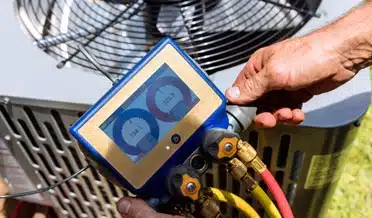
  • Refrigerant gas, commonly called Freon, moves through a closed loop of tubes.
  • A compressor motor puts refrigerant gas under significant pressure—approximately 400 psi. Since the compression makes the gas extremely hot, it is performed outdoors.
  • When the pressure is suddenly released, the gas becomes very cold very quickly. The refrigerant gas readily absorbs the heat and cools the surrounding air in the indoor cabinet.
  • The hot gas now moves outdoors through a network of tubes to be cooled by moving air. If the gas does not cool, compressing it again will cause the system to overheat and damage vital components.

Potential Damage

While the condenser unit is made of sturdy, industrial components, many of the materials are rather thin and vulnerable to damage from the high winds and heavy rains that characterize strong storms. During a strong storm, shutting off power to the AC system is a good idea; power surges can damage the system’s electronics. Before turning on the air conditioner, inspect the condenser unit for damage, looking for:

  • Strong winds or flood waters can pick up the condenser or worse, cause it to be airborne. In some locations, local ordinances may require the condenser to be strapped down to prevent it from being carried away in high winds.
  • Downed lines. Observe the surroundings carefully, watching for downed power lines. Notice the conduit, carrying electricity to the condenser; it cares high voltage, so take note of any damage to the unit’s wiring. If the wiring is damaged, stay away and call a professional technician.
  • Standing water. Thunderstorms can produce flash flooding, but hurricanes produce huge amounts of rain and can result in a pool of water surrounding the condenser unit. Remember that water is a very good conductor of electricity and do not enter the standing water until the power is shut off to the unit.
  • Tubing damage. Observe two copper tubes that connect the condenser to the indoor cabinet. These tubes contain refrigerant gas and might be damaged by flying debris or movement. If damage is observed, do not turn the system on until repairs are made.
  • Oily leak. The coil of tubing that cools refrigerant gas is susceptible to damage from flying debris or movement of the condenser cabinet. Since the gas is under pressure, the system must remain an intact closed loop. A tell-tale sign of gas leakage is a black, oily substance—a component of the gas. If you observe this substance, call a technician before restoring power to the system.
  • Dirt and debris. The wind carries many objects, both small and large, often at very high speeds. Make sure to clear limbs, leaves, and other large objects away from the condenser. The fan is drawing air through the unit and out the top, so make sure to allow two feet of clearance for adequate airflow.

Use a garden hose and gently wash the coil of the condenser unit. When dust and sand become lodged between the fins of the coil, it reduces the necessary airflow. This can lead to overheating of the compressor motor and catastrophic damage to the unit.

Let us help with your Post Hurricane HVAC Repairs!

Schedule your free HVAC Repairs consultation by calling AllCool AC & Heating at 281-238-9292 or contact us via email.


1 https://www.weather.gov/hgx/severe_weather_awareness_thunderstorm#:~:text=On%20average%2C%20southeast%20Texas%20experiences,the%20afternoon%20and%20evening%20hours